Dizziness and balance
What happens during a vestibular evaluation for dizziness?
Learn what clinicians ask, what they may test, and why dizziness treatment depends on the cause and the pattern of your symptoms.
In brief
Dizziness can mean spinning, lightheadedness, unsteadiness, blurred vision with movement, or the feeling that you may fall. Those descriptions point to different possible causes, so the evaluation begins with the exact sensation, timing, and triggers.
A vestibular evaluation looks at how the inner ear, eyes, brain, sensation, and muscles work together to keep you oriented and steady. The clinician also watches for findings that require medical testing or referral.
Your symptom history directs the examination
The clinician will ask when the problem began, how long each episode lasts, and what brings it on. Turning in bed, looking up, walking in a busy store, standing quickly, or moving the head may produce very different patterns.
Be ready to discuss hearing changes, ringing or pressure in the ear, headaches, nausea, vision changes, falls, recent illness, head injury, and every medication or supplement you take.
What may be tested
The exact examination depends on your symptoms and medical history. A therapist may select from several types of tests:
- Eye and head movement: The eyes provide information about how the vestibular system responds while the head moves.
- Positional testing: Specific head and body positions may be used when the history suggests benign paroxysmal positional vertigo, commonly called BPPV.
- Standing balance: The clinician may change the surface, visual conditions, foot position, or head movement to see which situations reduce stability.
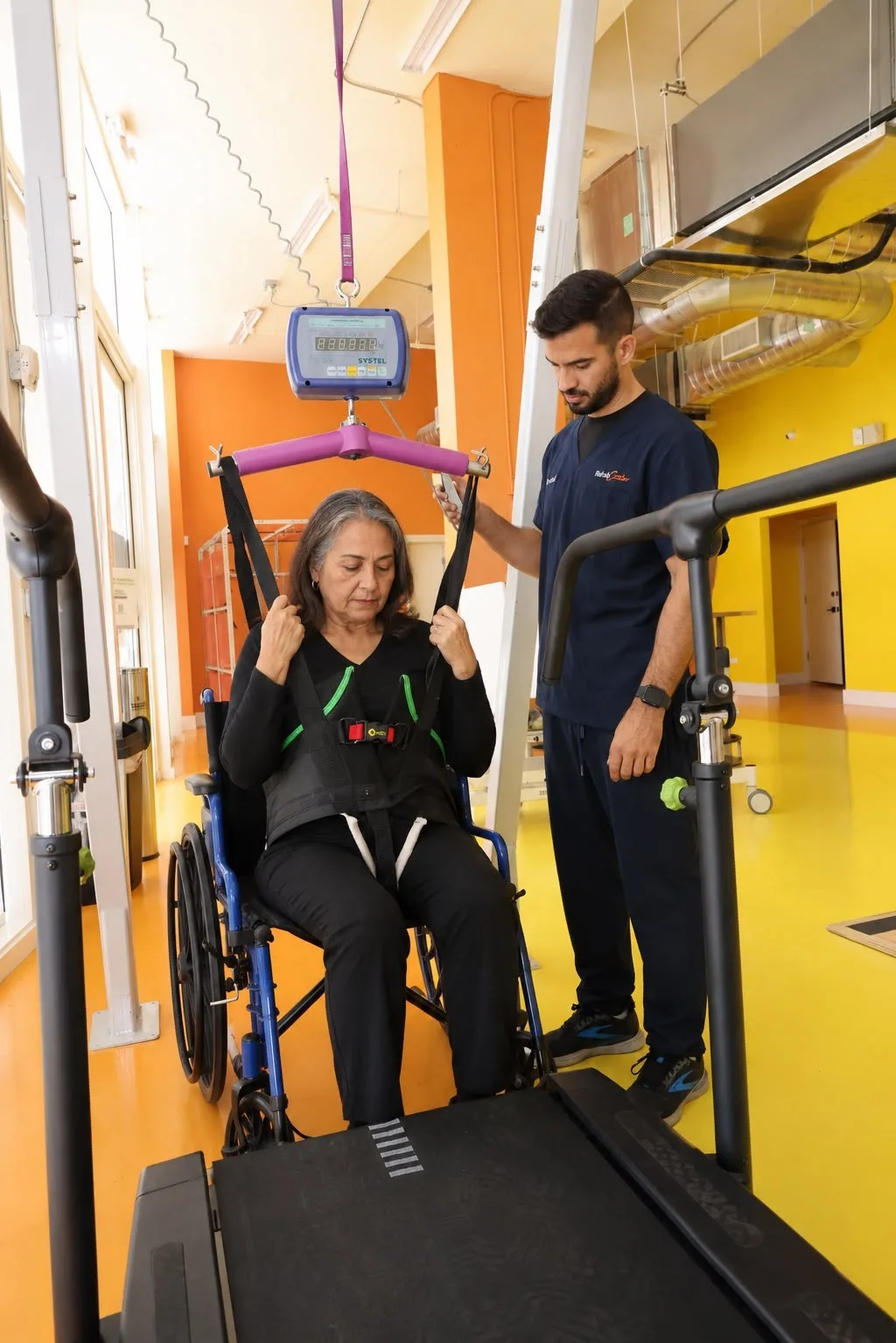
- Walking and functional tasks: Turning, changing speed, stepping over objects, or walking while moving the head can show how symptoms affect daily mobility.
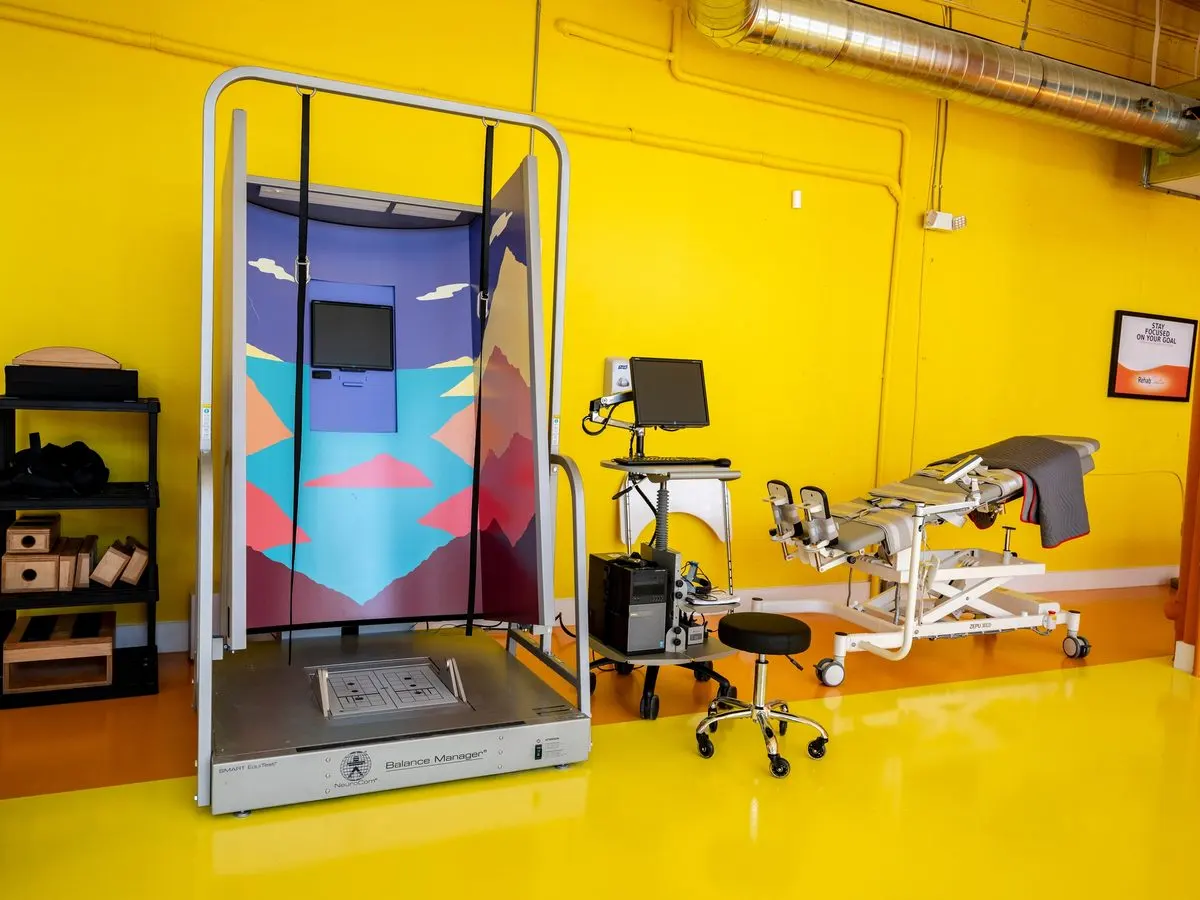
- Computerized posturography: A force platform can record balance responses under controlled sensory conditions and add objective measurements to the examination.
Treatment follows the findings
The clinician selects exercises after identifying the symptom pattern, safety needs, and examination findings.
- Canalith repositioning: A sequence of positions may be used when testing identifies BPPV.
- Gaze-stability work: Head and eye exercises may be used when vision becomes blurry or unstable with head movement.
- Habituation: Carefully selected movements may help reduce sensitivity to motions that repeatedly provoke symptoms.
- Balance and walking practice: Exercises can address steadiness, foot placement, turns, uneven surfaces, and fall risk.
- Conditioning: Gradual activity may be included when dizziness has led to less walking or exercise.
What to bring to the appointment
A short symptom record can be more useful than trying to remember every episode during the visit.
- What the dizziness feels like and how long it lasts.
- Positions, environments, or movements that trigger it.
- Hearing, vision, headache, nausea, numbness, or weakness that occurs at the same time.
- Recent falls or situations when you nearly fell.
- Your medication and supplement list, plus relevant medical records.
Frequently asked questions
What happens during a vestibular evaluation for dizziness?
A vestibular evaluation begins with the exact sensation, timing, and triggers. The clinician may examine eye and head movement, positional responses, standing balance, walking, and functional tasks. Computerized posturography may add objective balance measurements when it is appropriate for the symptoms and medical history.
Can vestibular therapy help every cause of dizziness?
No. Dizziness can come from different vestibular, neurological, cardiovascular, medication-related, visual, or other medical causes. The evaluation helps determine whether vestibular rehabilitation fits the pattern or whether medical testing or referral should come first.
Can testing temporarily reproduce dizziness?
Some eye, head, position, balance, or walking tests may reproduce familiar symptoms because the clinician needs to observe what triggers them. Tell the clinician how you feel throughout the examination so testing can be paused or adjusted when needed.
Sources and further reading
This patient guide was prepared from the following government and professional resources:
- Balance DisordersNational Institute on Deafness and Other Communication DisordersOpen source
- Clinical Practice Guideline: Vestibular Rehabilitation for Peripheral Vestibular HypofunctionAcademy of Neurologic Physical TherapyOpen source