
Vestibular & Balance Rehabilitation in Hallandale Beach
Evaluation-guided therapy for vertigo, dizziness, unsteadiness, and balance changes. We connect your medical information and balance findings to exercises and practical strategies for everyday movement.
Care in English and Spanish
Vertigo, balance, and fall prevention.
We begin with your diagnosis, referral information, and current symptoms, then determine which evaluations and exercises are appropriate.
Ask a QuestionVestibular Therapy for Vertigo & Dizziness
Evaluation-informed therapy for vertigo, dizziness, motion sensitivity, gaze instability, and related mobility limitations.
Balance Disorder Therapy
Assessment and training for postural control, unsteadiness, turning, walking, stairs, and sensory balance challenges.
Fall Prevention Therapy
Individualized balance, strength, gait, assistive-device, and home-safety strategies designed to reduce fall risk.
Balance practice for everyday movement.
What we work on depends on the cause, what the exam shows, how much you can tolerate, and how likely a fall is.
Gaze stability
Use individually selected exercises to improve visual stability during head and body movement when appropriate.
Postural control
Practice standing balance under safe, progressive sensory and surface conditions.
Walking confidence
Work on turning, speed changes, obstacles, stairs, and community mobility based on ability.
Fall-risk reduction
Identify practical safety strategies, assistive-device needs, and home or family considerations.
Your first vestibular and balance evaluation.
We match your symptoms to the things you are struggling with, so we can tell you plainly what therapy will help with — and when you should see someone else instead.
Clarify symptoms and diagnosis
We review symptom triggers, falls, hearing or vision concerns, medications, medical notes, and prior testing.
Measure balance and mobility
Testing may review standing, walking, head movement, visual stability, turning, and sensory balance.
Build a safe progression
The plan matches exercises, technology, education, and fall-reduction strategies to the findings.
Technology that supports your Vestibular & Balance Rehabilitation
Computerized assessment and supported practice may help the clinical team understand balance responses and select appropriate exercises for dizziness, unsteadiness, or fall risk. The equipment used depends on your evaluation, symptoms, safety, and goals.
Explore all technology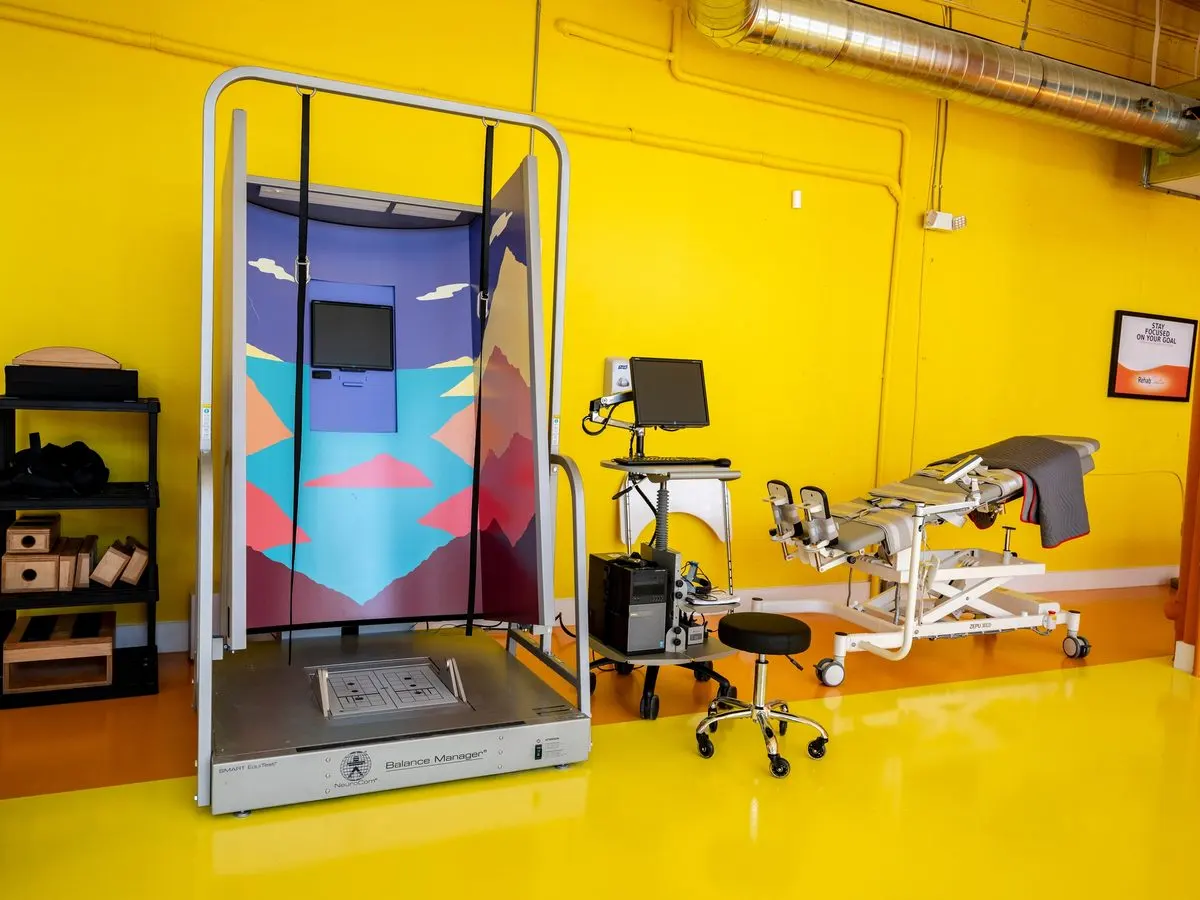
View equipment for this program
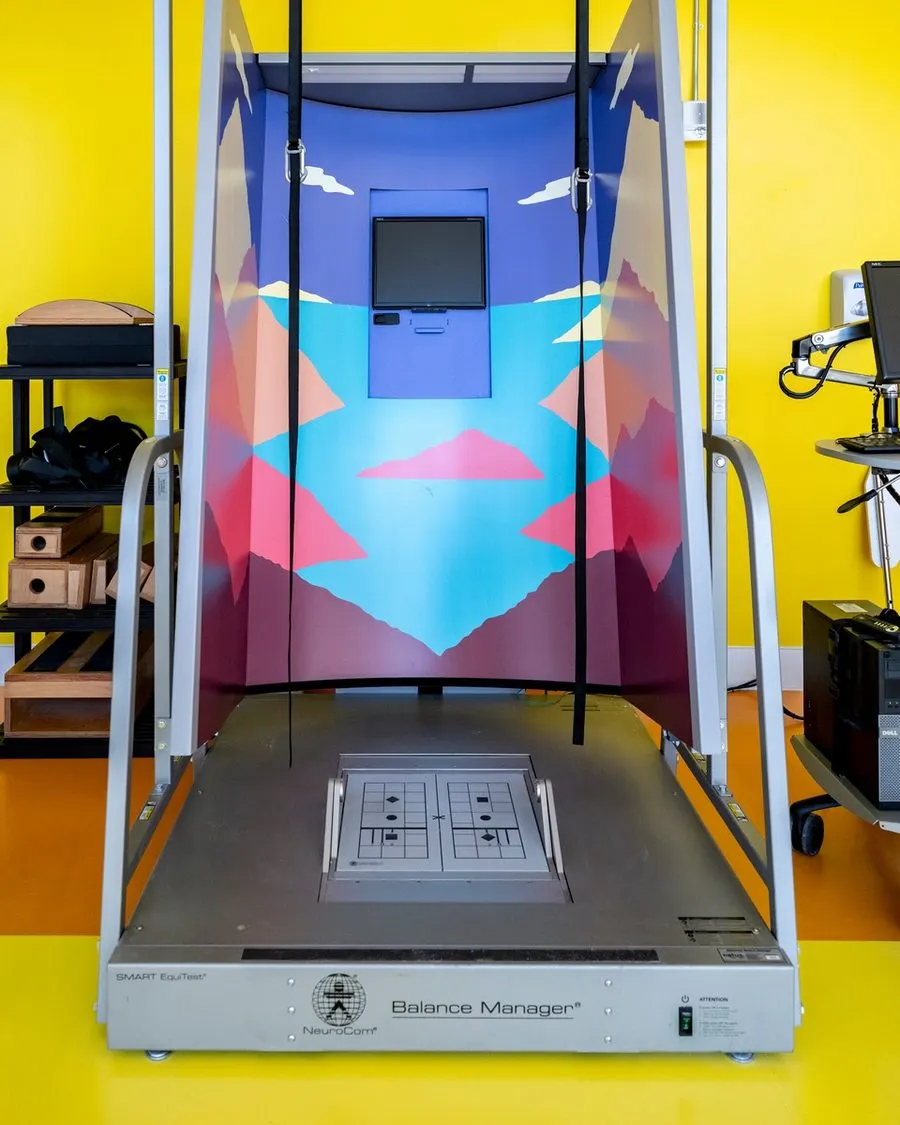
SMART EquiTest® Balance System
Computerized assessment and training can measure balance responses and guide appropriate balance practice.
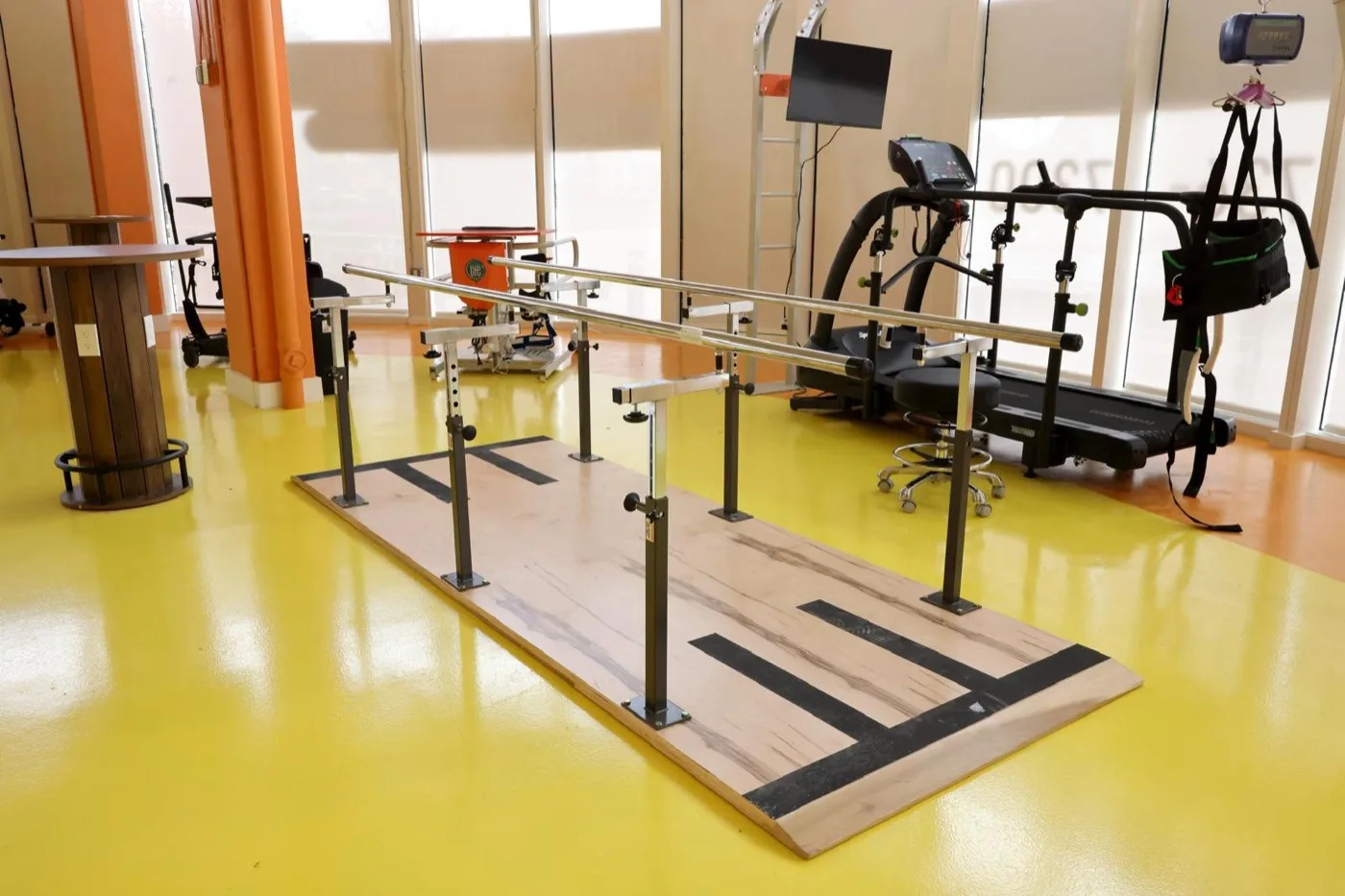
Parallel Bars
Bilateral hand support can be used for standing, transfers, weight shifting, stepping, and gait practice.
Vestibular and balance questions
Talk with us about your questionsDo you diagnose the cause of dizziness?
The rehabilitation evaluation reviews function and existing medical information. Some symptoms require assessment by a physician, audiologist, ENT specialist, or another provider before therapy.
What should I bring?
Bring referral notes, vestibular or hearing test results, imaging reports, medication information, and the mobility device you currently use.
Is balance technology used for every patient?
No. Computerized balance assessment or training is used only when it is clinically appropriate and safe for the individual.