Amputee Rehabilitation in Hallandale Beach
Rehabilitation for transfers, strength, balance, and mobility before and after prosthetic fitting. Your plan follows medical guidance, current abilities, and the activities you want to do more independently.
Care in English and Spanish
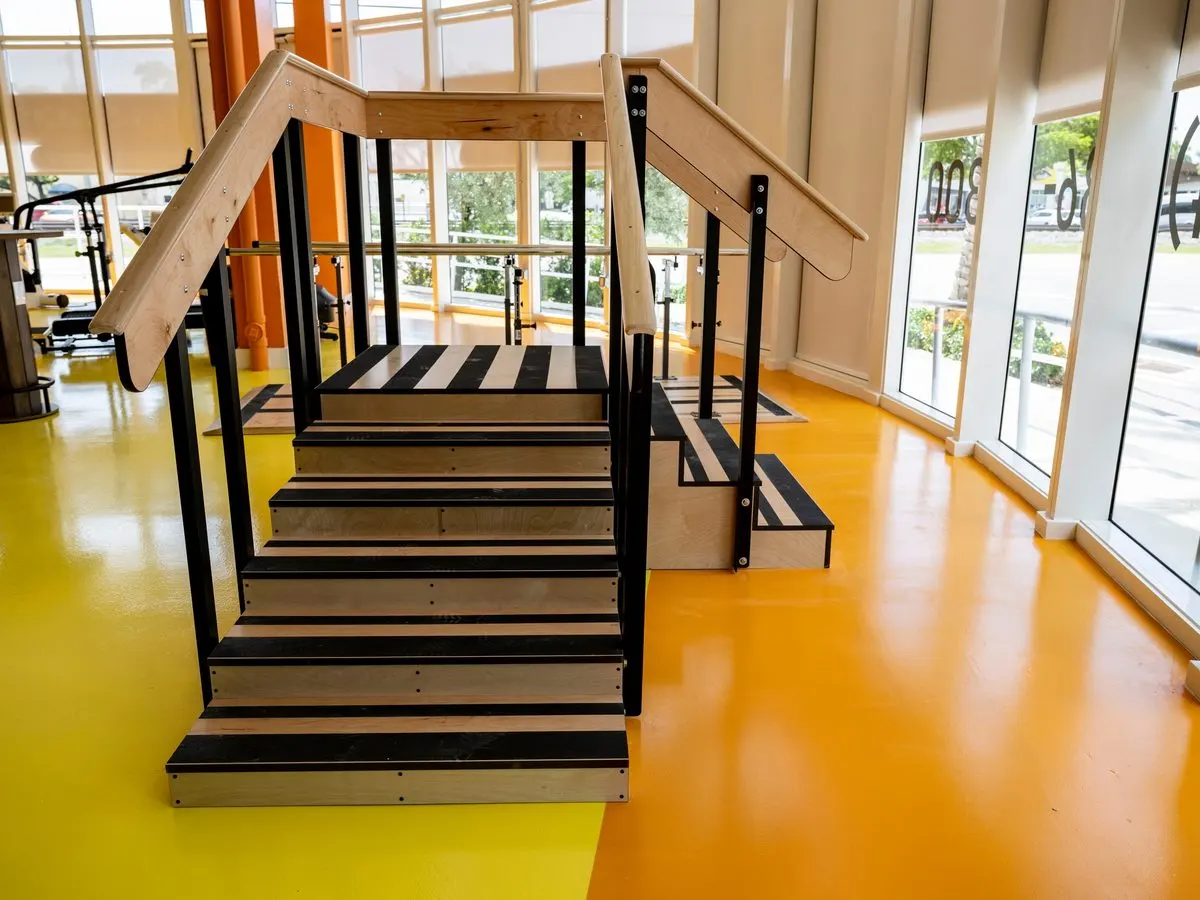
Care before and after prosthetic fitting.
Your stage of recovery and prosthetic status guide the plan, in coordination with your surgeon, physician, and prosthetist.
Ask a QuestionEarly functional recovery
Positioning, safe transfers, mobility equipment, range of motion, strengthening, and daily-task strategies after medical clearance.
Pre-prosthetic preparation
Work on residual-limb tolerance, positioning, strength, balance, endurance, and mobility with or without a prosthesis.
Prosthetic training
Practice device management, standing, walking, and functional use after fitting and clinical approval.
Community and daily activity
Build confidence with home tasks, stairs, uneven surfaces, self-care, and participation goals.
Goals that follow the stage of recovery
Not everyone uses a prosthesis, and that is fine. We aim for the highest level of function that is safe for you, with whatever equipment fits.
Transfers and mobility
Practice bed, chair, toilet, vehicle, and walking or wheelchair mobility with appropriate equipment.
Balance and fall reduction
Build postural control, weight shifting, recovery strategies, and safe device use.
Prosthetic preparation and use
Practice putting on and removing the prosthesis, wearing routines, functional use, and walking when appropriate.
Daily independence
Adapt dressing, bathing, meal tasks, household movement, and family support to the current stage.
Your first amputee rehabilitation evaluation.
The first visit establishes what you are cleared to do right now, what equipment you have, and which goal to work on first.
Confirm healing and medical status
We review surgical notes, wound or limb precautions, pain concerns, medical clearance, and current equipment.
Assess safe function
The team reviews strength, range, transfers, balance, mobility, self-care, and prosthetic status when relevant.
Coordinate the next stage
The plan identifies therapy priorities and coordination needs with the physician, surgeon, or prosthetist.
Technology that supports your Amputee Rehabilitation
Equipment may support transfers, upright tolerance, balance, weight shifting, and walking practice during amputee rehabilitation. The clinical team selects each system according to healing, prosthetic status, current mobility, safety, and goals.
Explore all technology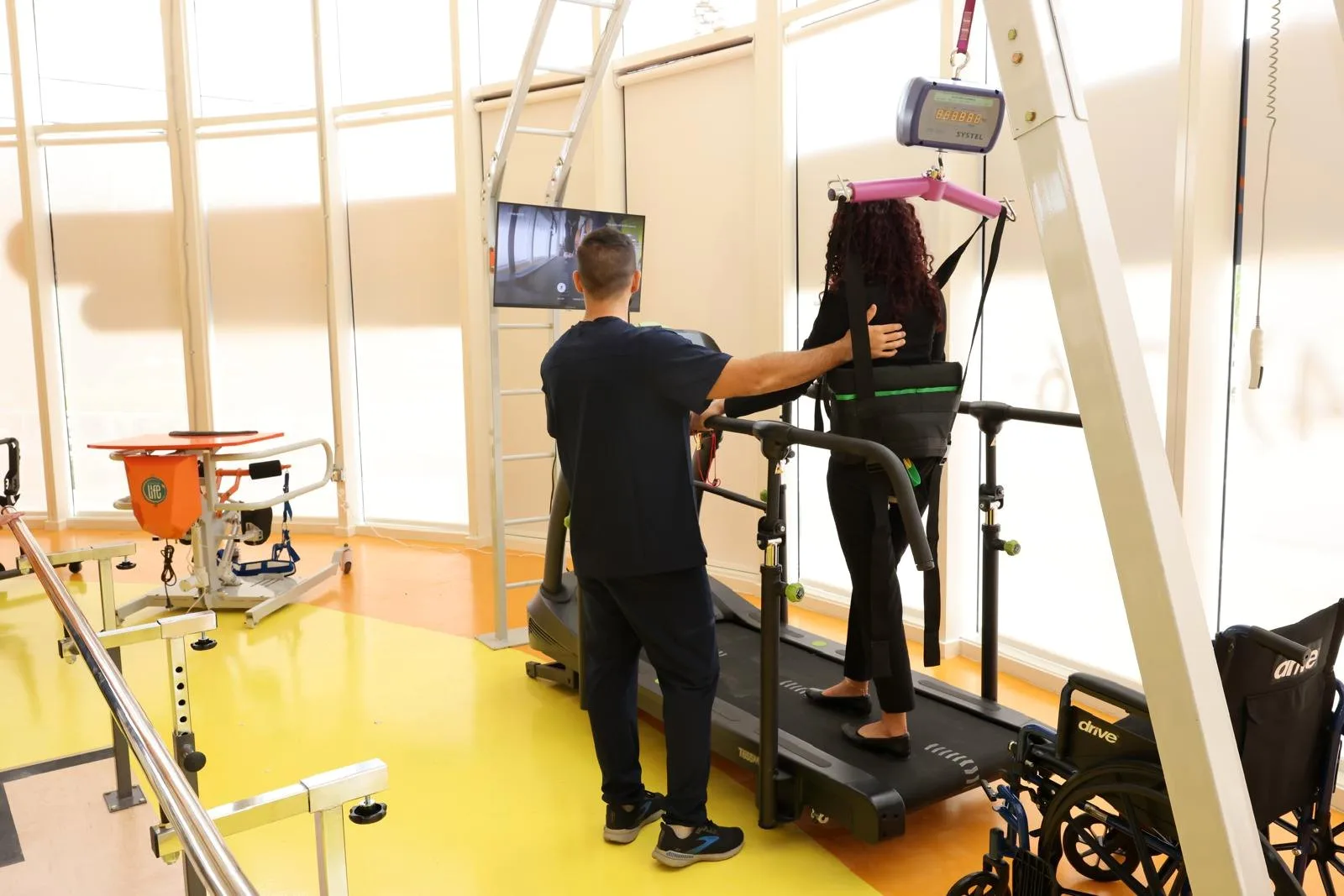
View equipment for this program
MOTOmed Muvi
Motor-assisted arm and leg cycling can be adjusted to the person’s current movement ability.
Body-Weight-Supported Treadmill
A harness reduces the amount of body weight the patient must manage during supported walking practice.
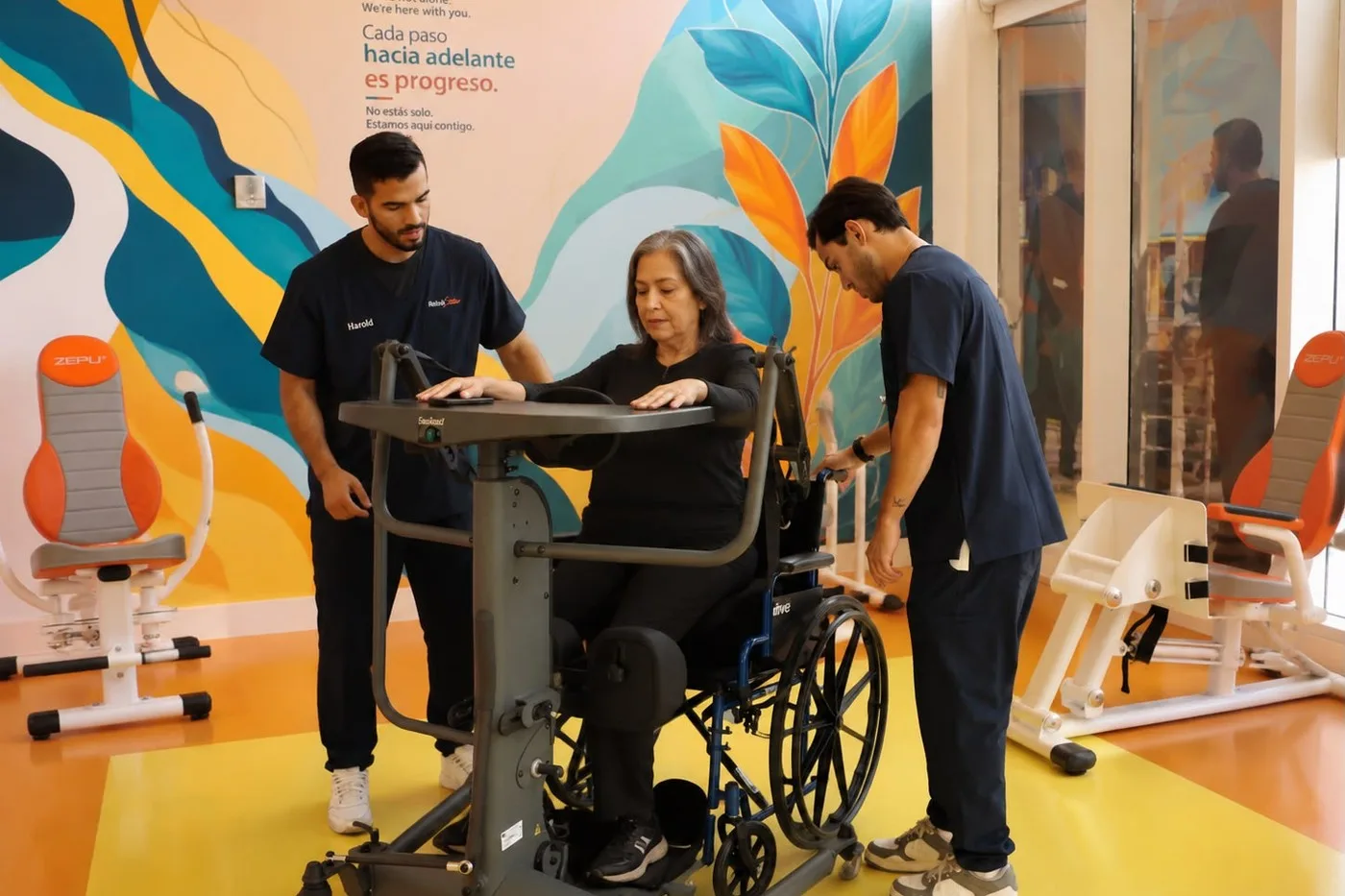
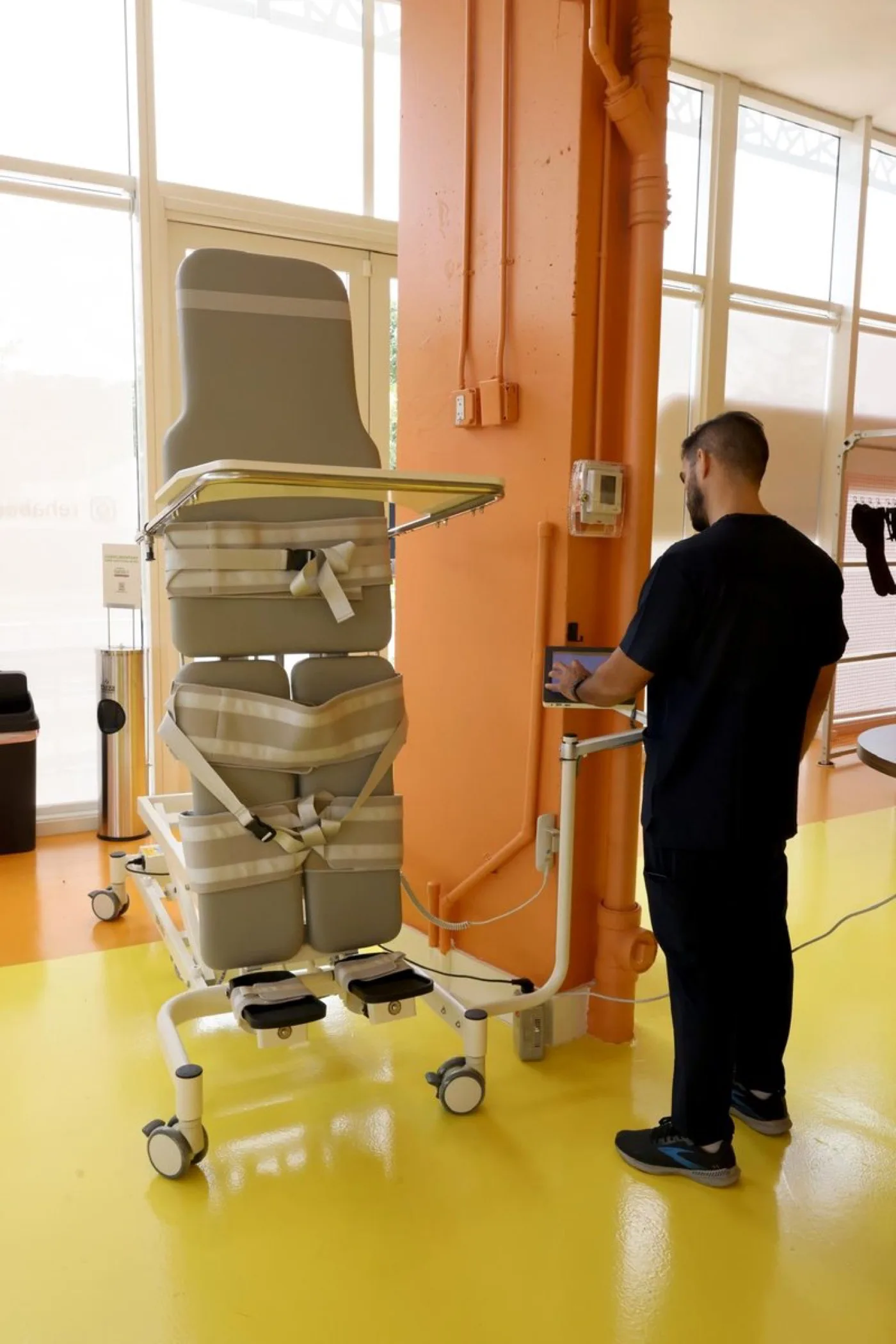
ZEPU Standing Table
The table can bring the body gradually toward an upright position when standing tolerance is part of the plan.
Standing Frame
The frame provides support for upright positioning when independent standing is not currently appropriate.
Parallel Bars
Bilateral hand support can be used for standing, transfers, weight shifting, stepping, and gait practice.
Amputation rehabilitation questions
Talk with us about your questionsCan rehabilitation begin before I receive a prosthesis?
Yes, after medical clearance. Early goals may include positioning, range of motion, strength, transfers, residual-limb care education, balance, and mobility equipment.
Do I need to bring my prosthesis or mobility equipment?
Yes. Bring the prosthesis, liner, socks, cane, walker, wheelchair, or other equipment currently used, along with fitting or medical information.
Does every patient train to walk with a prosthesis?
No. Goals depend on health, healing, limb level, strength, safety, personal priorities, and evaluation by the medical and prosthetic team.