
Knee Replacement Rehabilitation in Hallandale Beach
Rehabilitation for knee movement, strength, walking, balance, and daily activities after knee replacement or surgery. Your plan follows healing, evaluation findings, and your surgeon’s instructions.
Care in English and Spanish
Care after knee replacement or surgery.
The team reviews the exact procedure, medical stability, wound status, precautions, loading instructions, and current mobility before treatment begins.
Ask a QuestionTotal knee replacement
Rehabilitation for knee motion, strength, walking, stairs, balance, and daily routines.
Knee surgery with loading restrictions
Therapy planned around the surgeon’s documented partial or limited weight-bearing order.
Walking or transfer difficulty
Practice for gait, assistive-device use, chairs, vehicles, and household mobility.
A surgeon-guided return to activity
Progress is based on healing, symptoms, evaluation findings, and the postoperative protocol—not a generic schedule.
Knee motion
Work on bending and straightening within postoperative guidance.
Leg strength
Progress lower-limb strength as medically appropriate.
Walking and stairs
Practice gait, turns, steps, and device use at the prescribed loading level.
Daily activities
Build capacity for household and community tasks that matter to you.
Bring the knee surgery protocol
The first visit reviews surgery details, precautions, pain and swelling, knee motion, strength, walking, equipment, and personal goals.
Confirm surgical instructions
Bring the referral, operative information, precautions, wound guidance, and weight-bearing order.
Measure current function
We review motion, strength, swelling, pain, transfers, balance, gait, and stairs as relevant.
Plan safe progression
We set measurable milestones within the surgeon’s protocol.
Technology that supports your Knee Replacement Rehabilitation
Selected equipment may support knee movement, transfers, standing, balance, and walking practice after knee replacement. Your therapist chooses each tool according to healing, medical guidance, current mobility, safety, and goals.
Explore all technology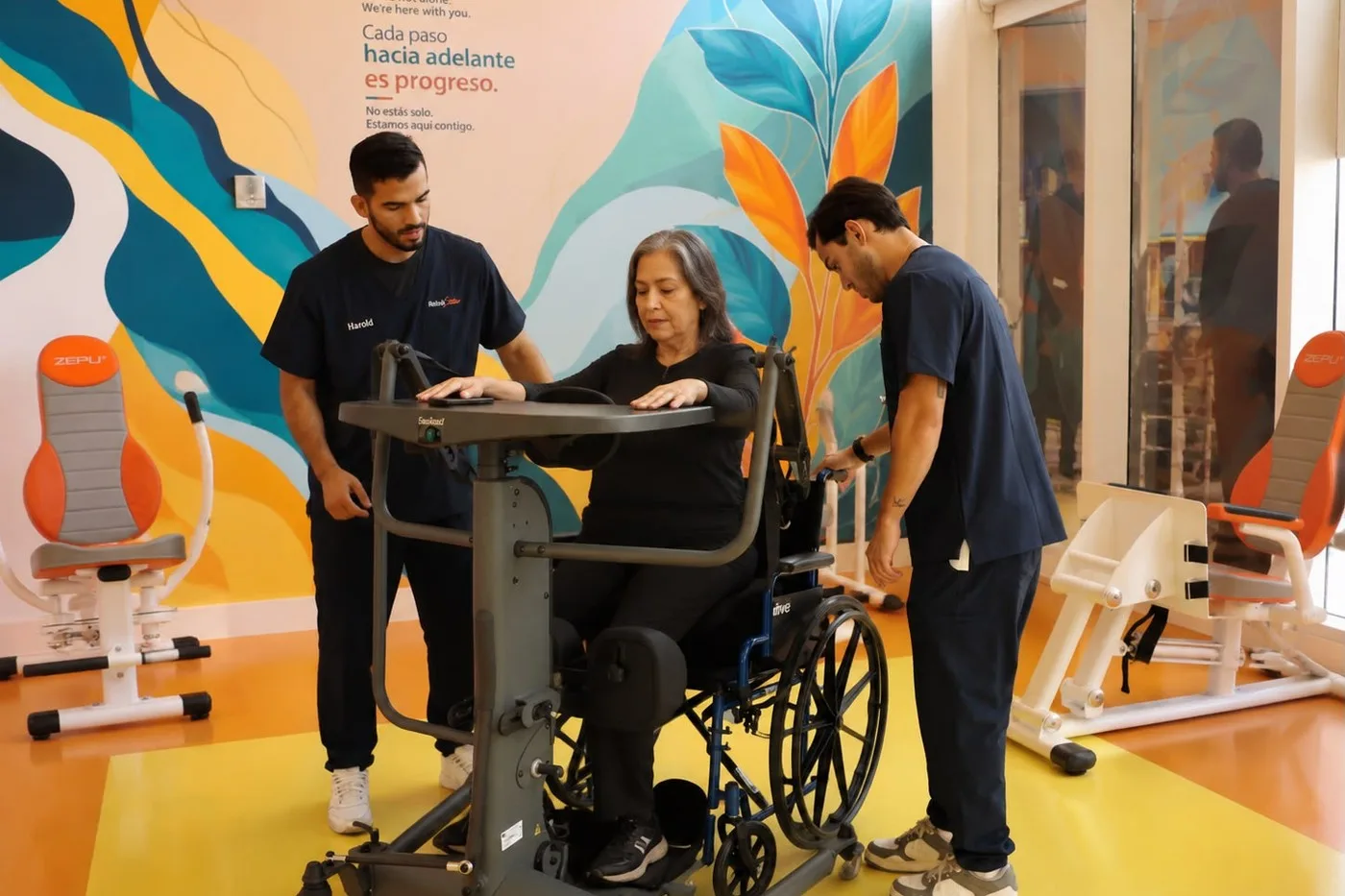
View equipment for this program
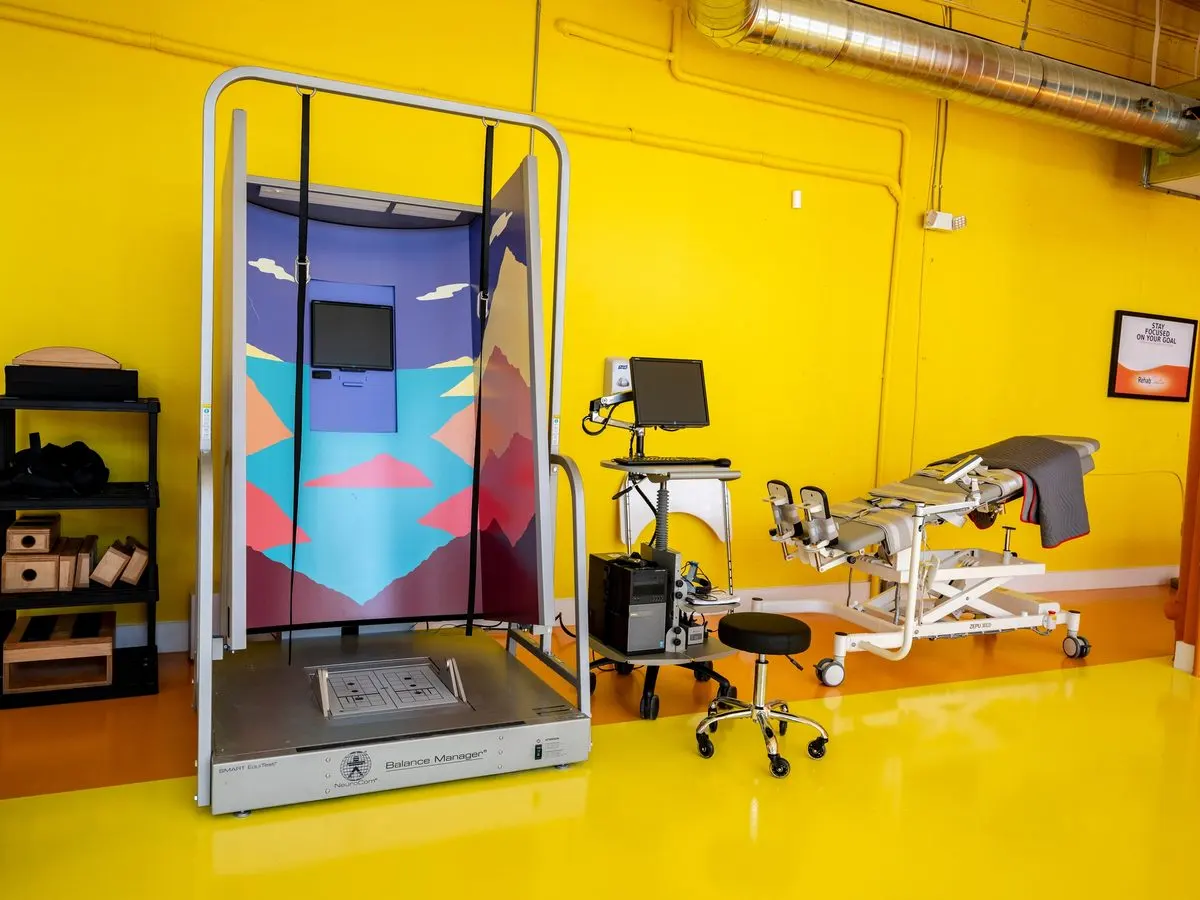
SMART EquiTest® Balance System
Computerized assessment and training can measure balance responses and guide appropriate balance practice.
Standing Frame
The frame provides support for upright positioning when independent standing is not currently appropriate.
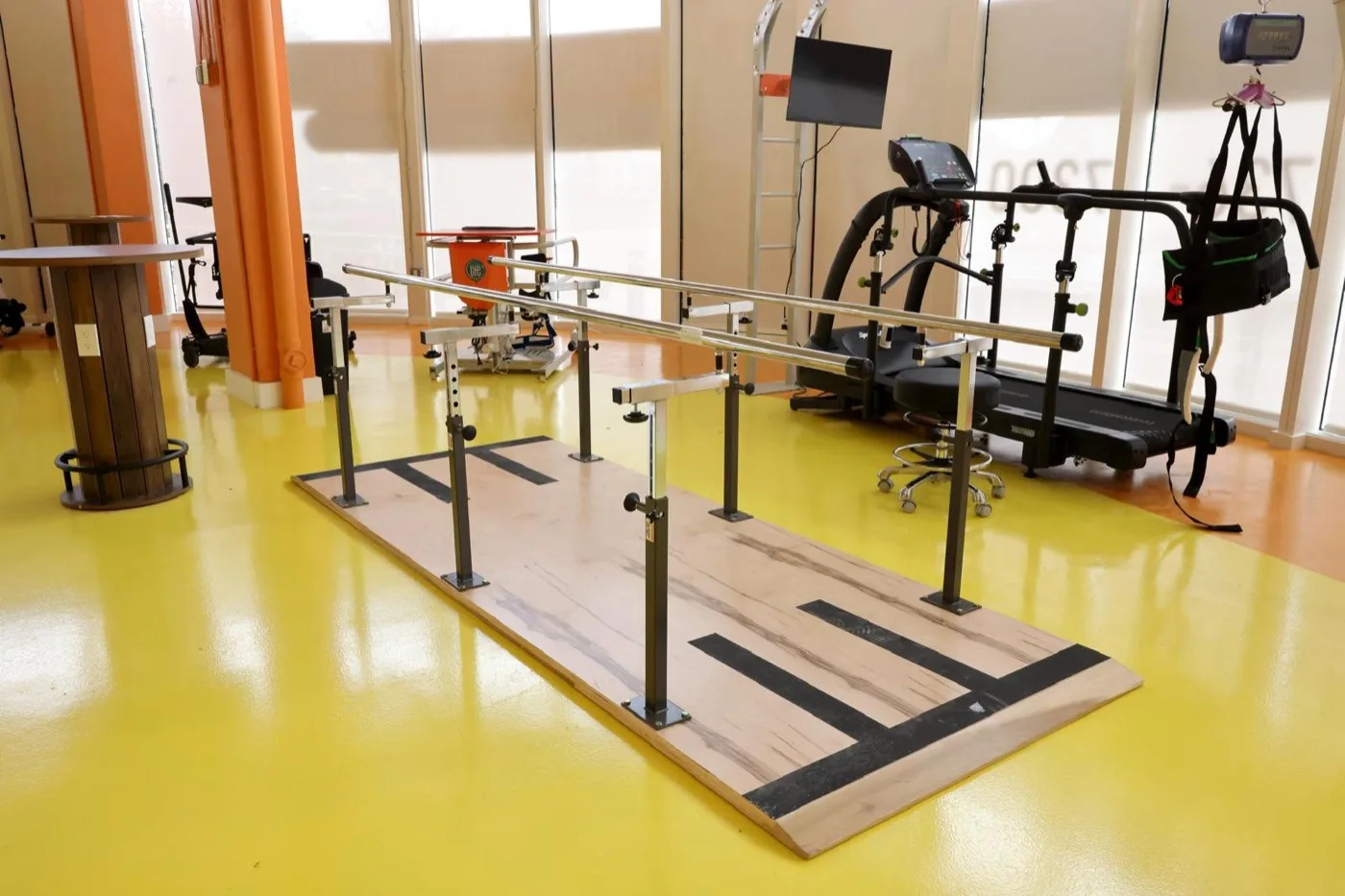
Parallel Bars
Bilateral hand support can be used for standing, transfers, weight shifting, stepping, and gait practice.
Knee rehabilitation questions
Talk with us about your questionsDo I need the surgeon’s instructions?
Yes. Bring the referral and postoperative protocol, including any weight-bearing or movement restrictions.
Will therapy work on stairs?
Stair practice may be included when it is safe, relevant to your goals, and permitted by the surgical plan.
What equipment should I bring?
Bring the walker, cane, brace, or other device you currently use so the therapist can assess fit and technique.