Walking, transfers, and balance
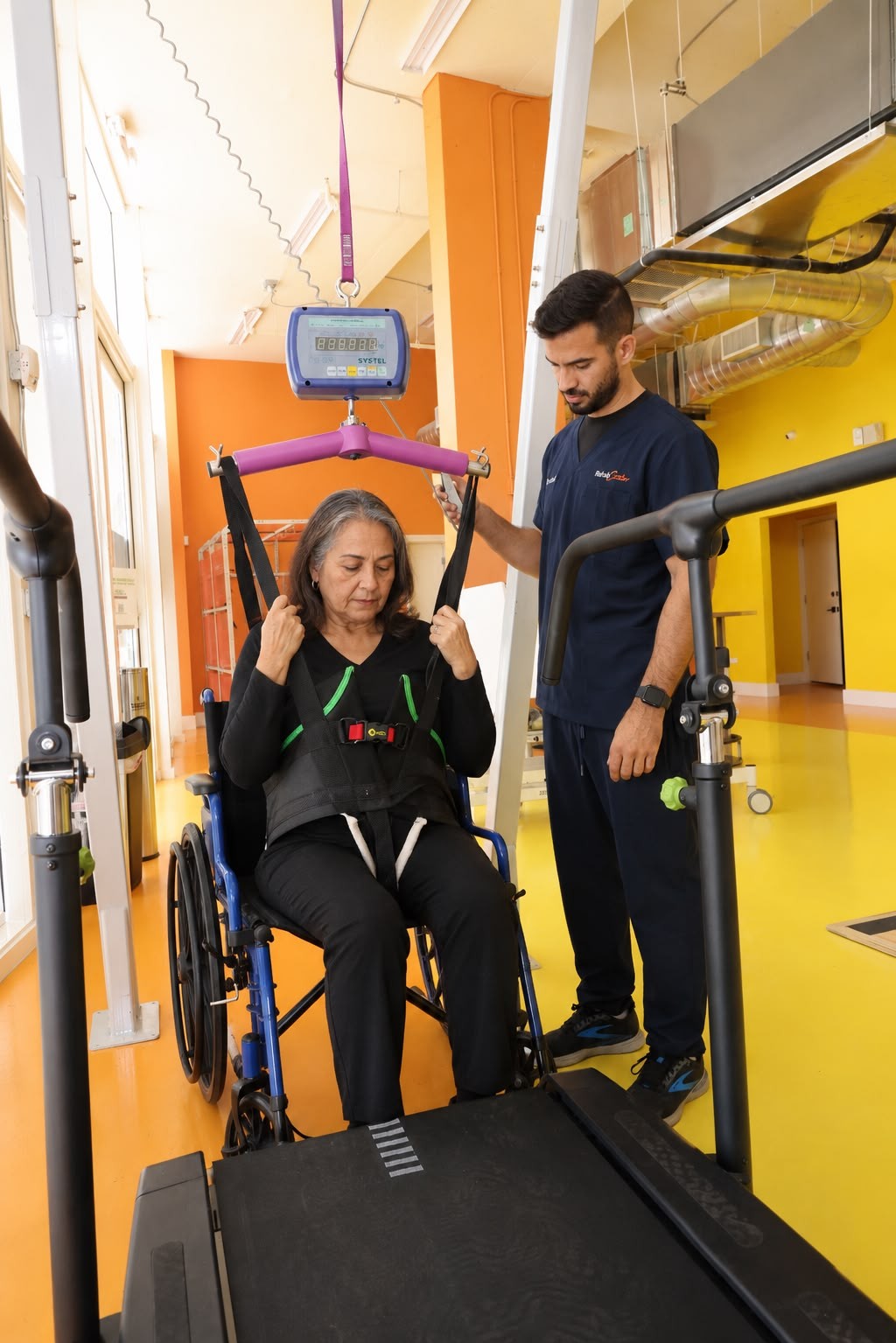
Physical therapy may focus on getting in and out of a chair or bed, standing, walking, balance, and moving safely through everyday environments.
Treatments
Mon - Fri: 9:00 AM - 5:00 PM
Saturday: Closed · Sunday: Closed
Physical, occupational, and speech-language therapy for changes in walking, balance, arm and hand use, communication, and daily activities after a stroke. Care is available in English or Spanish.
Stroke recovery looks different for every person. We begin with what has changed, the support you need now, and the activities you want to return to. Your plan then focuses on the abilities that support greater independence at home and in the community.
Physical therapy may focus on getting in and out of a chair or bed, standing, walking, balance, and moving safely through everyday environments.
Occupational therapy may address reaching, grasping, coordination, and using the affected arm during dressing, meals, and other meaningful tasks.
Speech-language therapy may address aphasia, including changes in understanding, speaking, reading, and writing, as well as strategies for everyday communication.
Occupational therapy may work on dressing, bathing, meal preparation, home routines, and practical strategies for doing more with the right level of support.
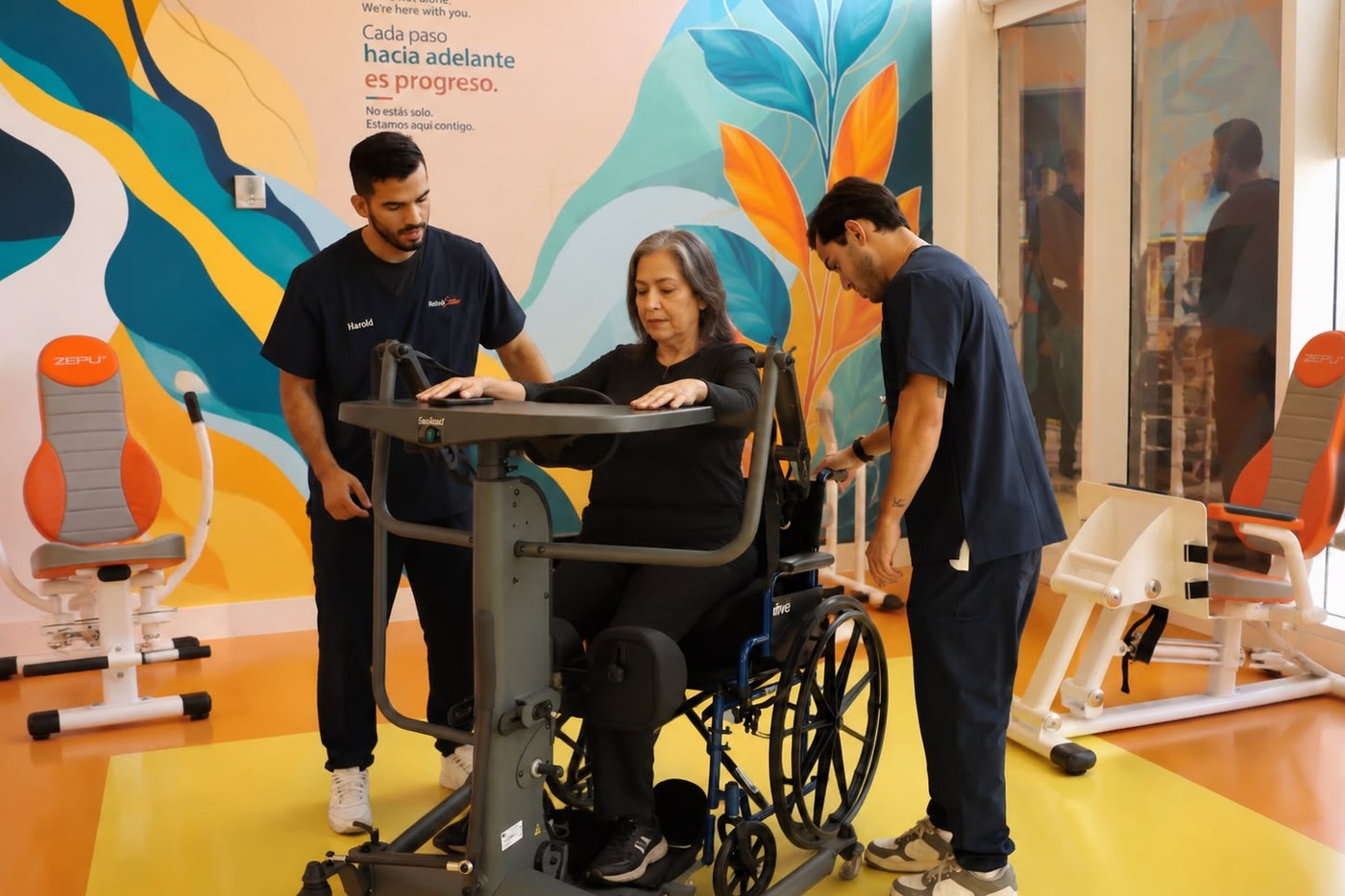
Your evaluation looks at movement, balance, arm and hand function, communication, and daily activities. Physical, occupational, and speech-language therapists then work from shared priorities and adjust the plan as your needs change.
We learn what is difficult now, what support you need, and which activities matter most to you.
Together, we connect therapy goals to the tasks and routines you want to improve.
Your clinicians follow shared priorities, review your response, and adapt the plan when appropriate.
Stroke rehabilitation often includes repeated, task-specific practice. When clinically appropriate, your therapist may use specialized equipment to support arm and hand movement, standing, walking, or balance assessment. Each tool is selected around your current abilities, safety, and goals.
Explore all technologyThese systems can support repeated practice of reaching, grasping, coordination, range of motion, and functional tasks affected by a stroke.
Electrical stimulation can be coordinated with selected movements and functional task practice.
Suspension and graded resistance can support movement, positioning, and range-of-motion practice.
Motor-assisted arm and leg cycling can be adjusted to the person’s current movement ability.
A modular workstation for arm and hand movement, coordination, dexterity, and functional task practice.
Different levels of support can be used for upright positioning, weight shifting, stepping, and walking practice after a stroke.
Bilateral hand support can be used for standing, transfers, weight shifting, stepping, and gait practice.
A harness reduces the amount of body weight the patient must manage during supported walking practice.
The frame provides support for upright positioning when independent standing is not currently appropriate.
Computerized measurement can help the clinical team understand how you respond to changing balance conditions and select appropriate balance practice.
Computerized assessment and training can measure balance responses and guide appropriate balance practice.
Tell us what has changed since the stroke and what you want to do more independently. Our team will help you schedule an evaluation and answer questions about getting started.