Stroke recovery
What to expect from outpatient stroke rehabilitation
A practical look at the first evaluation, common therapy goals, and what to bring when rehabilitation continues after discharge home.
In brief
Outpatient rehabilitation is one option for people who are living at home and can travel to therapy after a stroke. The right setting depends on medical needs, current function, available support, and how much therapy the person can safely tolerate.
The first visit should identify what has become harder since the stroke and which activities matter most to the patient now. Those priorities guide the evaluation and treatment plan.
The evaluation starts with what changed
A clinician will review the stroke history, hospital or rehabilitation records, current medications, precautions, and any equipment already being used. The physical assessment then focuses on the tasks that affect daily life.
Depending on the person’s needs, the evaluation may cover several areas:
- Walking, transfers, standing balance, strength, coordination, and endurance.
- Arm and hand movement for reaching, grasping, dressing, eating, or other daily tasks.
- Speech, language, thinking, memory, or swallowing concerns that need assessment by the appropriate clinician.
- Fatigue, falls, pain, home access, and the help available from family or care partners.
Goals should describe real activities
A useful goal is specific enough to guide treatment. “Get stronger” may become “stand from the dining chair with less help” or “walk from the bedroom to the bathroom with the safest appropriate device.” Communication goals may focus on expressing needs, following a conversation, reading, or writing.
Physical therapy, occupational therapy, and speech-language therapy address different parts of recovery. Care is coordinated around the patient’s priorities instead of treating each concern as a separate checklist.
What treatment may include
Stroke rehabilitation uses repeated practice of meaningful tasks. The difficulty, amount of assistance, and pace should change with the patient’s response and medical status.
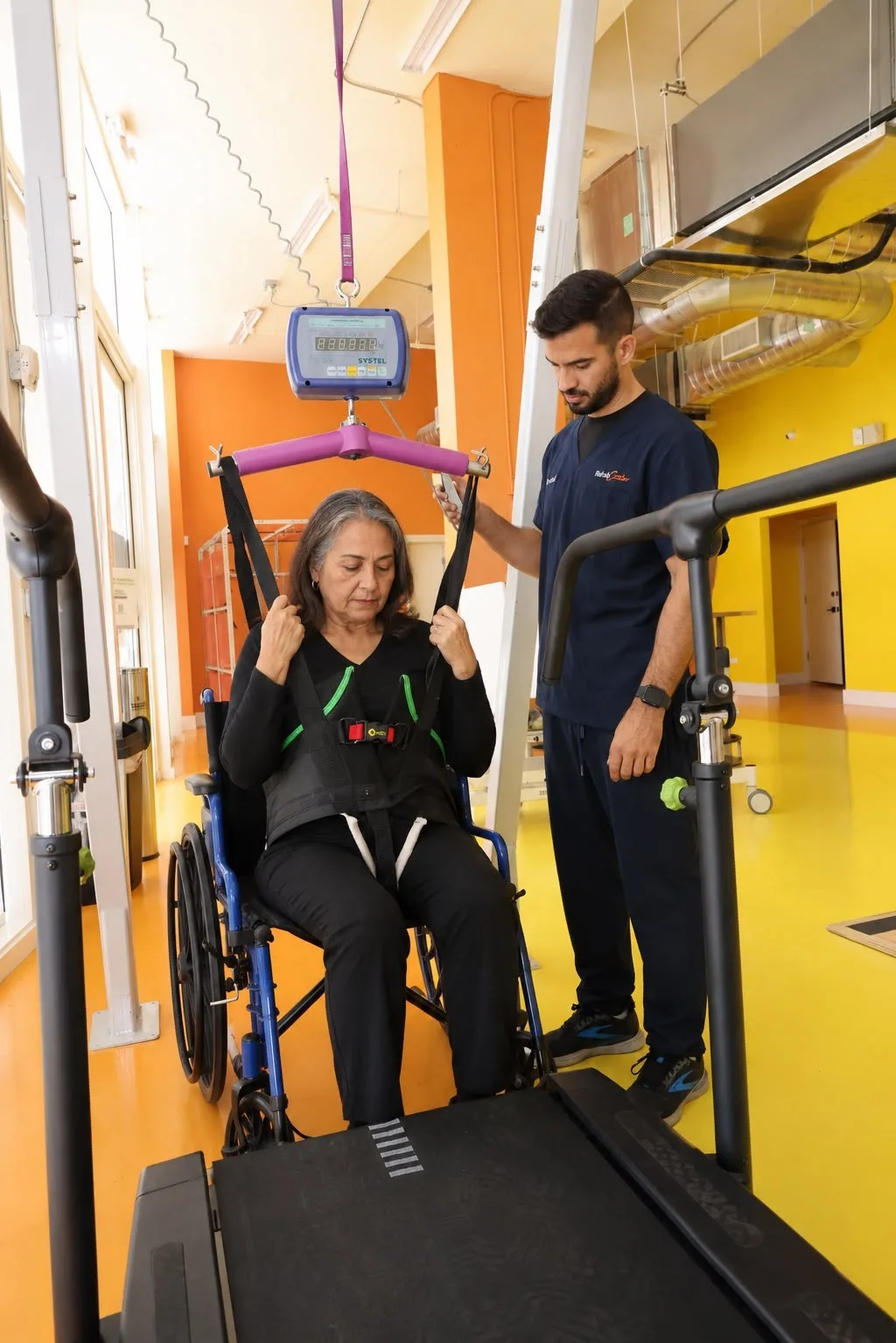
- Mobility practice: Transfers, standing, stepping, walking, stairs, balance, and endurance when appropriate.
- Arm and hand work: Reaching, grasping, coordination, range of motion, and daily activities.
- Communication support: Assessment and treatment for aphasia, speech changes, or cognitive-communication needs.
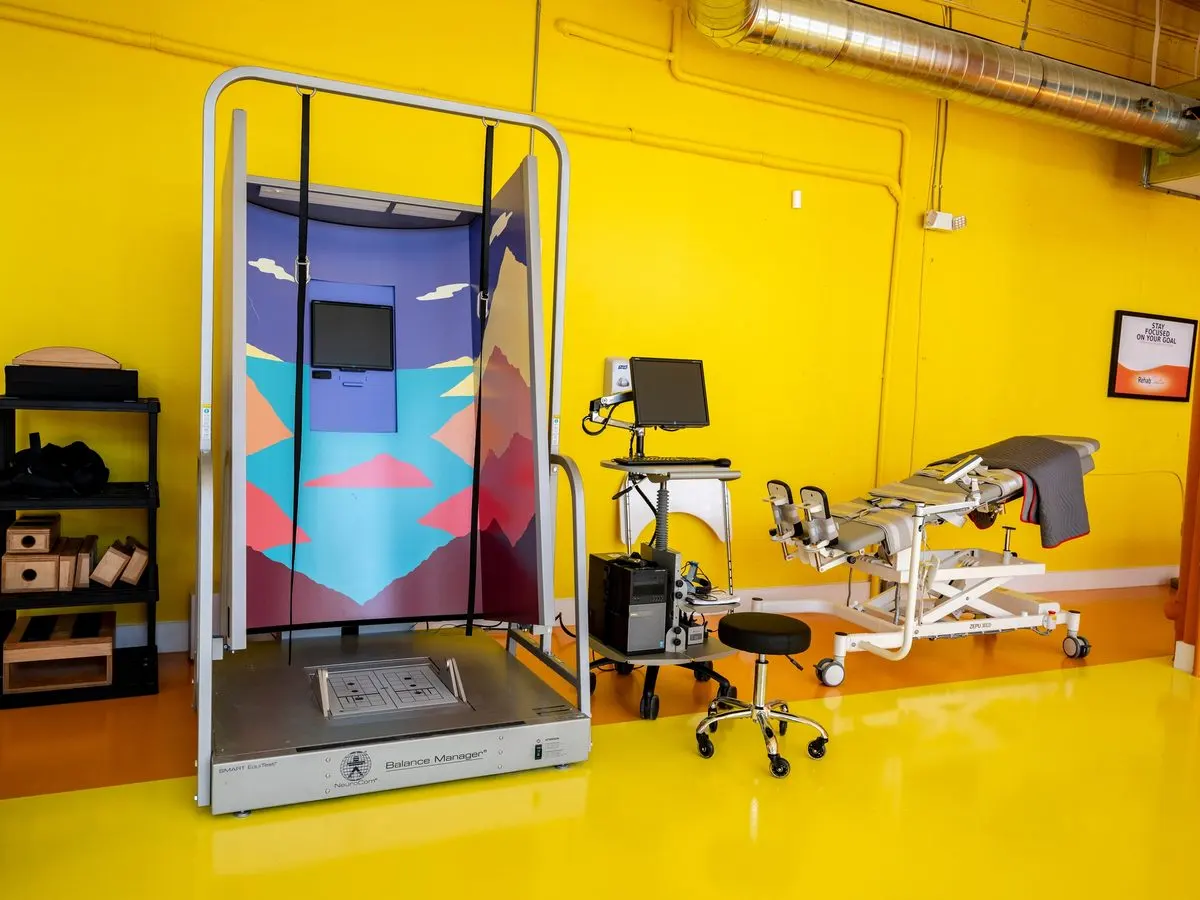
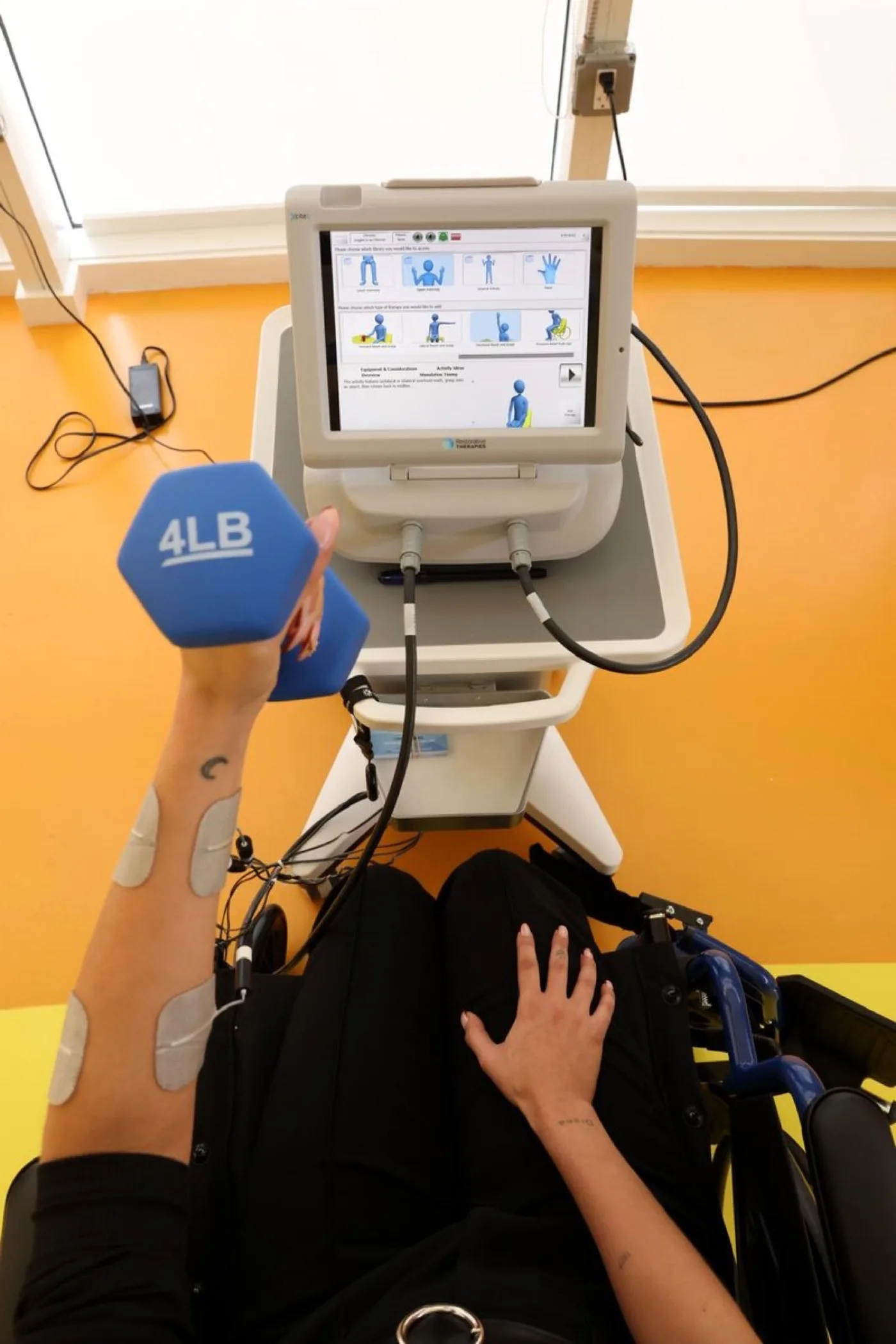
- Technology-assisted practice: Functional electrical stimulation, computerized balance assessment, supported walking, or cycling when the evaluation supports their use.
- Family education: Safer ways to assist, carry over selected exercises, and organize the home around current abilities.
How to prepare for the first visit
Bring enough information for the clinician to understand the full picture. A family member or care partner can join the visit when their perspective or assistance would help.
- Hospital discharge paperwork, therapy summaries, and current medical precautions.
- A current medication list and the contact information for the physicians managing the stroke.
- The cane, walker, brace, wheelchair, or communication device used at home.
- Notes about recent falls, pain, fatigue, swallowing concerns, or changes since discharge.
- Two or three activities the patient most wants to improve.
Questions worth asking
Ask how progress will be measured, which disciplines should be involved, what can be practiced safely at home, and who to contact when symptoms or medical restrictions change. Clear answers make it easier for the patient, family, physicians, and therapy team to work from the same plan.
Frequently asked questions
What happens at the first outpatient stroke rehabilitation appointment?
The first appointment reviews the stroke history, current medications, precautions, equipment, and the activities that have become difficult. The clinician may assess walking, transfers, balance, strength, arm and hand use, endurance, communication, or cognition. The findings help identify which therapy disciplines and goals fit the patient’s current needs.
Which therapies may be part of stroke rehabilitation?
Stroke rehabilitation may involve physical therapy for movement and mobility, occupational therapy for daily activities and arm or hand function, and speech-language therapy for communication, cognition, or swallowing. The combination depends on the evaluation and the patient’s functional priorities.
What should I bring to a stroke rehabilitation evaluation?
Bring hospital discharge documents, previous therapy summaries, a current medication list, medical precautions, and the cane, walker, brace, wheelchair, or communication device used at home. It also helps to list recent falls, pain, fatigue, and two or three activities you most want to improve.
How long does outpatient stroke rehabilitation take?
There is no single timeline for outpatient stroke rehabilitation. The plan depends on medical status, current function, goals, response to treatment, transportation, and available support. Ask how progress will be measured and when the team will review or adjust the plan.
Sources and further reading
This patient guide was prepared from the following public health and professional resources:
- What to Expect From Stroke RehabilitationAmerican Stroke AssociationOpen source
- Guidelines for Adult Stroke Rehabilitation and Recovery: Top Things to KnowAmerican Heart AssociationOpen source