
Parkinson's Disease Rehabilitation in Hallandale Beach
Therapy for walking, balance, movement amplitude, transfers, and daily activities with Parkinson’s disease. Your plan connects repeated movement practice with the routines you want to manage more independently.
Care in English and Spanish
Parkinson’s therapy for everyday movement.
We begin with how Parkinson’s affects your movement today, then focus on the activities and support that matter most to you.
Ask a QuestionWalking and freezing
Gait rhythm, stride length, turning, and strategies for the moments when your feet feel stuck to the floor.
Balance and falls
Postural reactions, weight shifting, and safer movement in the situations where losing balance is most likely.
Movement initiation and amplitude
Starting movement more easily and keeping it large enough to be useful, since Parkinson’s tends to make movement smaller than it feels.
Posture and transfers
Standing taller, and getting in and out of chairs, beds and cars with less effort and more safety.
Speech and swallowing
Voice volume, clarity and swallowing safety, when speech-language therapy is part of the plan.
Handwriting and daily tasks
Dressing, eating, handwriting and the household routines that have become slower or harder.
Movement practice for your everyday priorities.
Goals follow your priorities and your stage. This program works alongside your neurologist — it does not replace that care.
Walk with a steadier rhythm
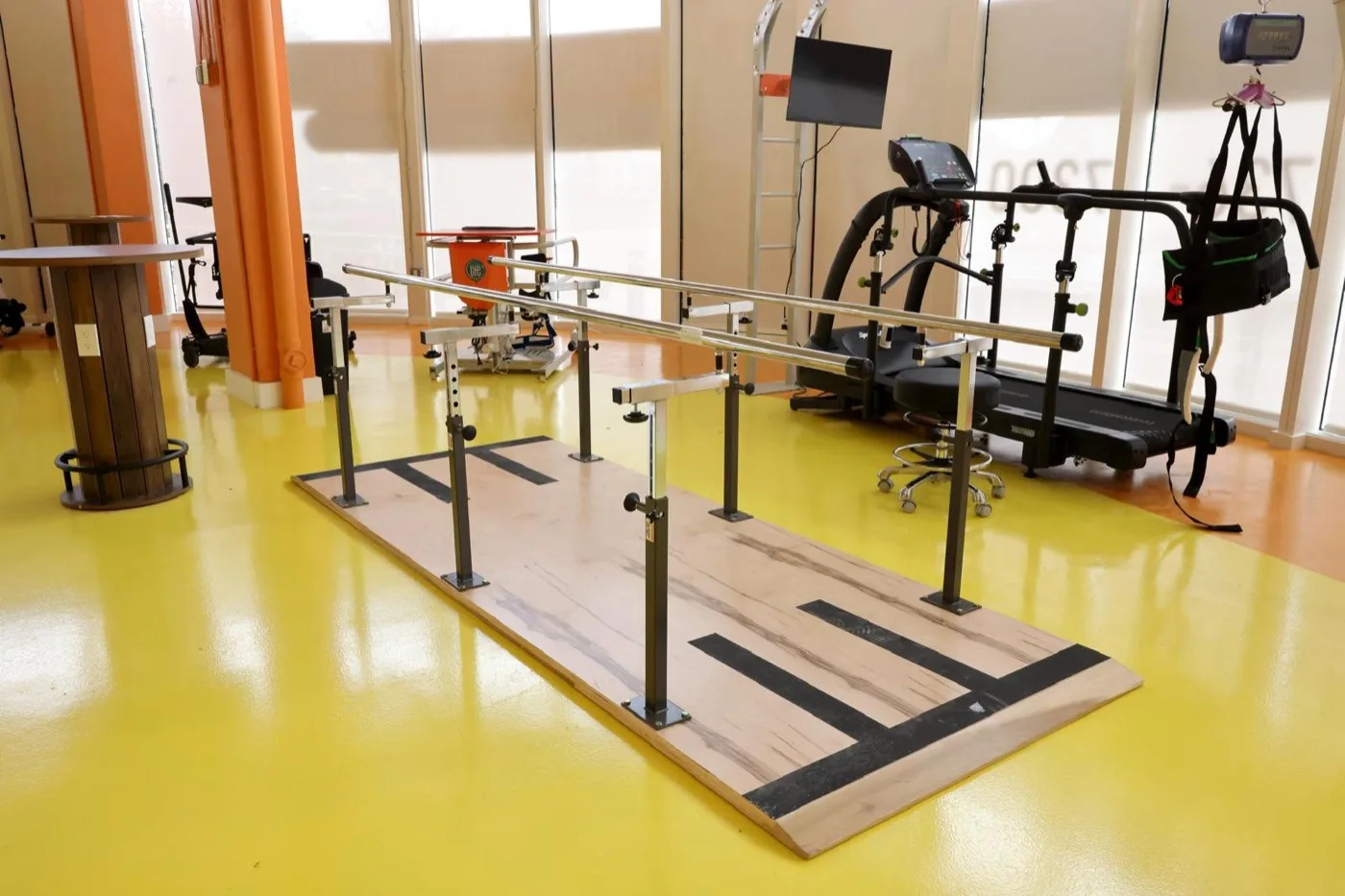
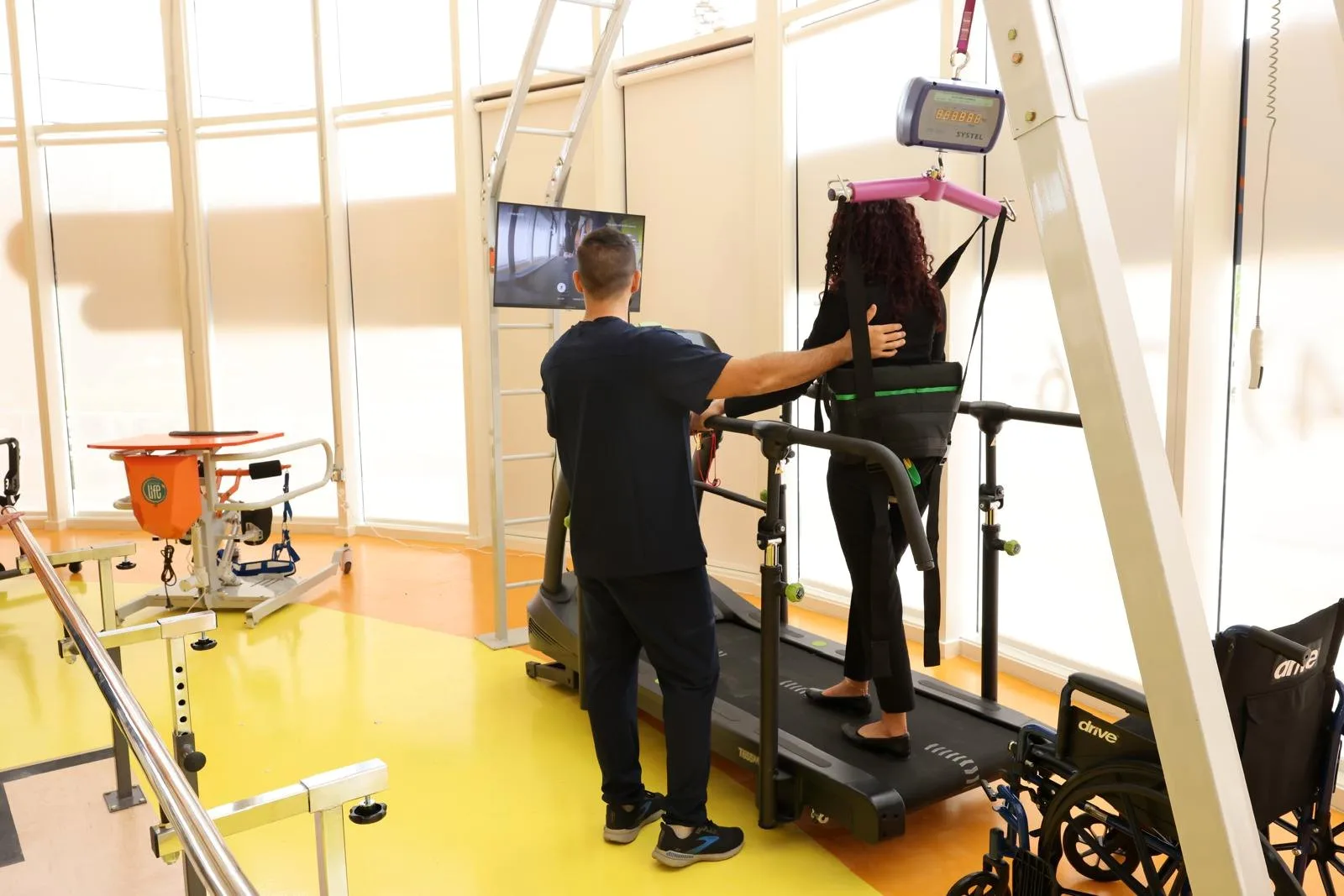
Gait practice in the parallel bars and on the treadmill, with body-weight support available when balance is not yet reliable.
Understand your balance
Computerized balance testing may help the team understand your responses and guide appropriate practice.
Keep movements big
Repeated large-amplitude practice for reaching, turning, standing and the movements that shrink first.
Communication and swallowing
Speech, voice and swallowing work with our multilingual speech-language pathologist when it belongs in the plan.
Your first Parkinson’s rehabilitation evaluation.
We start with your diagnosis, your medication schedule and what has changed recently — then ask what you most want to keep doing.
Review the medical picture
Bring your neurology notes, medication times, precautions and any therapy history. Medication timing matters for what we can measure.
Assess how you move now
We look at walking, turning, balance, transfers, posture, strength, and speech or swallowing where relevant.
Agree the next step
The team explains which disciplines should be involved, how often, and what we will re-measure.
Technology that supports your Parkinson's Rehabilitation
Equipment may support movement practice, posture, balance, transfers, and walking when these areas are part of your Parkinson’s rehabilitation plan. Your therapist selects each system according to your symptoms, safety, and response to activity.
Explore all technology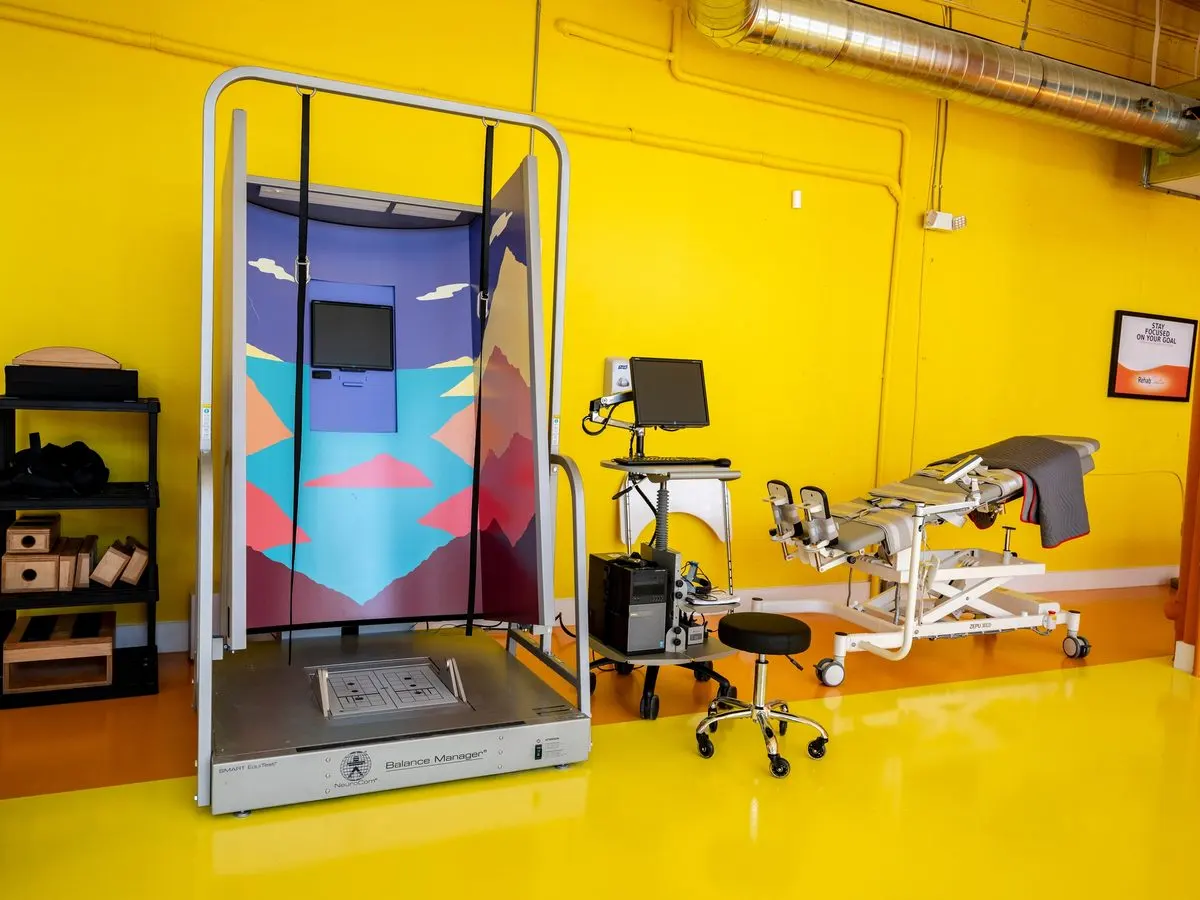
View equipment for this program
MOTOmed Muvi
Motor-assisted arm and leg cycling can be adjusted to the person’s current movement ability.
Body-Weight-Supported Treadmill
A harness reduces the amount of body weight the patient must manage during supported walking practice.
SMART EquiTest® Balance System
Computerized assessment and training can measure balance responses and guide appropriate balance practice.
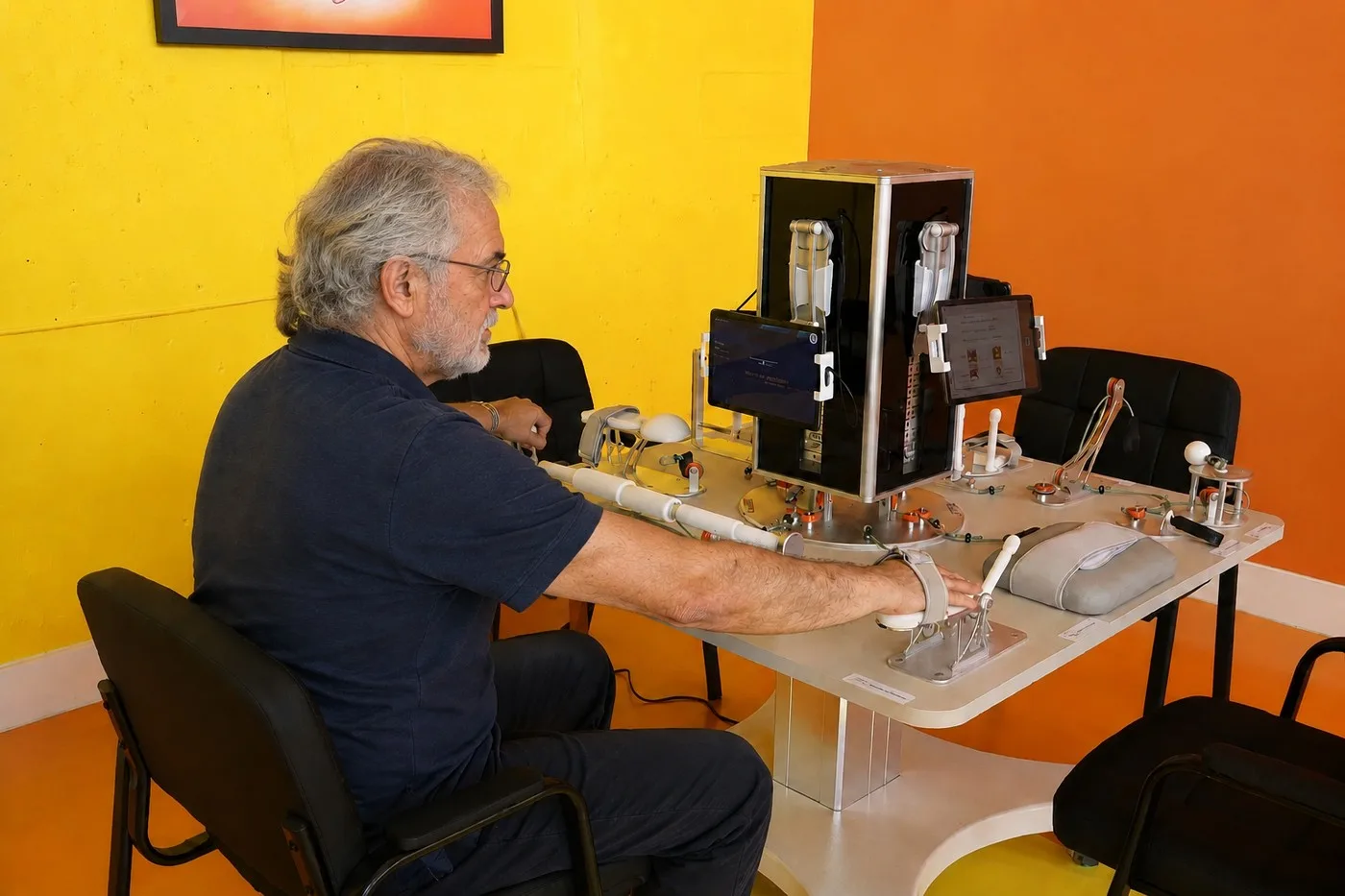
ZEPU Occupational Therapy Table
A modular workstation for arm and hand movement, coordination, dexterity, and functional task practice.
Standing Frame
The frame provides support for upright positioning when independent standing is not currently appropriate.
Parallel Bars
Bilateral hand support can be used for standing, transfers, weight shifting, stepping, and gait practice.
Questions families often ask
Talk with us about your questionsWhen in the disease should therapy start?
There is no single right moment. Many people are referred when walking, balance or daily tasks start changing, but the evaluation is useful earlier too, because it gives us a baseline to compare against later.
Does the medication schedule affect the sessions?
It can. Movement often differs between doses, so tell us your schedule and we will book you at a time that reflects how you usually function.
Can family or caregivers take part?
Yes. Family education can cover safe walking and transfers, cueing strategies for freezing, home setup, and what to do after a fall.
What is movement-amplitude practice?
It is practice with deliberately larger movements, selected around your abilities and goals. The clinic’s Parkinson’s program includes repeated movement practice for walking, balance, and coordination.
Is the program in Spanish?
Yes. Care is available in English and Spanish, including speech-language therapy when it is part of your plan.