
Multiple Sclerosis Physical Therapy in Hallandale Beach
Physical and occupational therapy for walking, balance, strength, coordination, and daily activities with multiple sclerosis. Your plan accounts for fatigue, changing symptoms, and the routines you want to manage more independently.
Care in English and Spanish
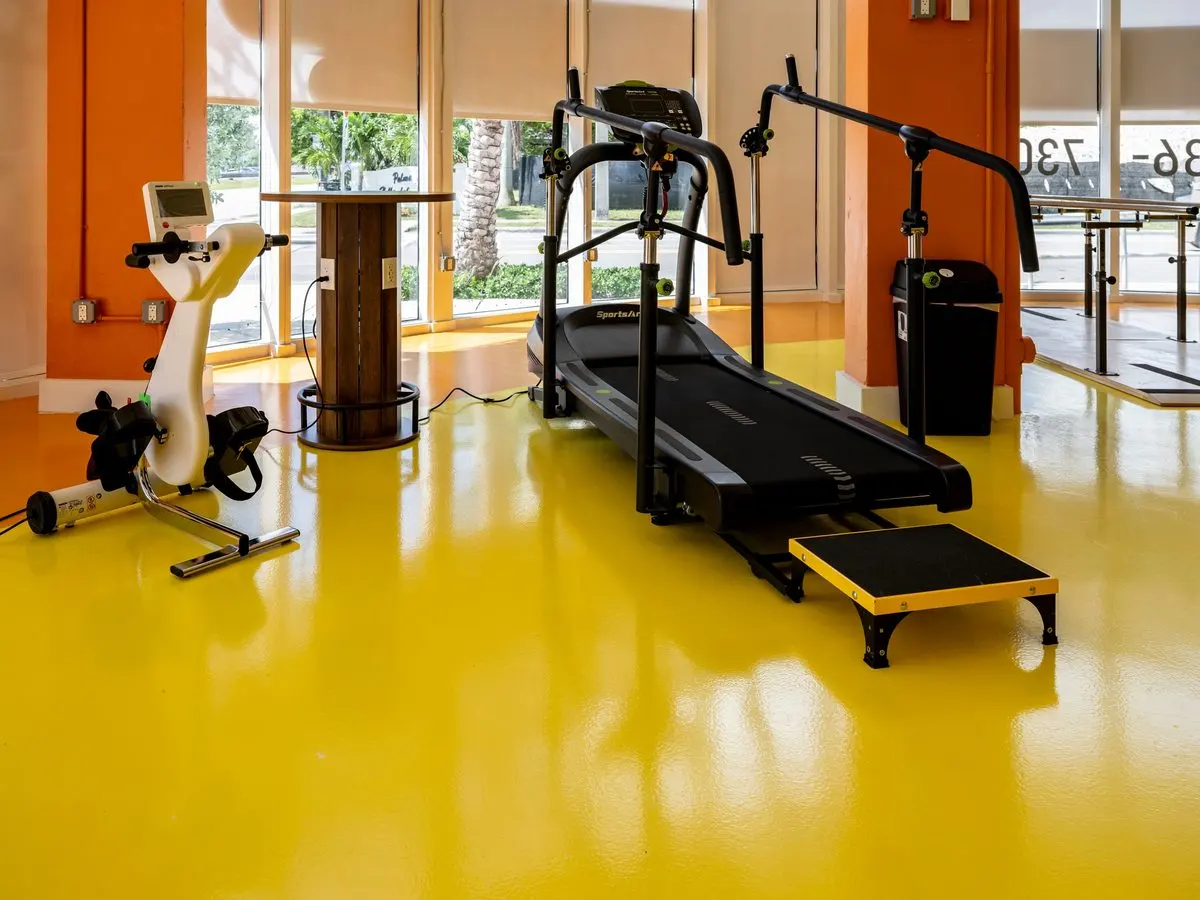
Multiple sclerosis care for movement and energy.
An evaluation helps the team understand which symptoms are limiting you and whether outpatient rehabilitation is an appropriate next step.
Ask a QuestionWalking and balance changes
Support for unsteadiness, altered walking, foot clearance, turning, transfers, and fall risk.
Weakness and coordination changes
Carefully selected activity for strength, movement control, upper-limb use, and functional mobility.
Fatigue affecting daily life
Pacing, energy-management strategies, and task planning for activities that have become harder to sustain.
Goals grounded in daily function
The plan is individualized and adjusted when fatigue, heat sensitivity, symptoms, or medical recommendations change.
Safer mobility
Practice walking, turns, transfers, and assistive-device use when appropriate.
Balance and coordination
Train postural control and movement accuracy for everyday situations.
Energy management
Use pacing and activity planning to make important tasks more manageable.
Daily independence
Work on the home, self-care, and community activities that matter to you.
Your first multiple sclerosis rehabilitation visit
We review the diagnosis, current symptoms, recent changes, medications, precautions, mobility equipment, and the activities you want to improve or preserve.
Understand your symptom pattern
We discuss fatigue, falls, mobility changes, and factors that make symptoms better or worse.
Assess current function
The team reviews strength, balance, coordination, walking, transfers, and daily tasks as relevant.
Set a realistic plan
Together, we define priorities and an intensity that respects your response to activity.
Technology that supports your Multiple Sclerosis Rehabilitation
Specialized equipment may support walking, balance, movement, and functional task practice when these areas are affected by multiple sclerosis. Your therapist adjusts the plan around current symptoms, fatigue, safety, and goals.
Explore all technology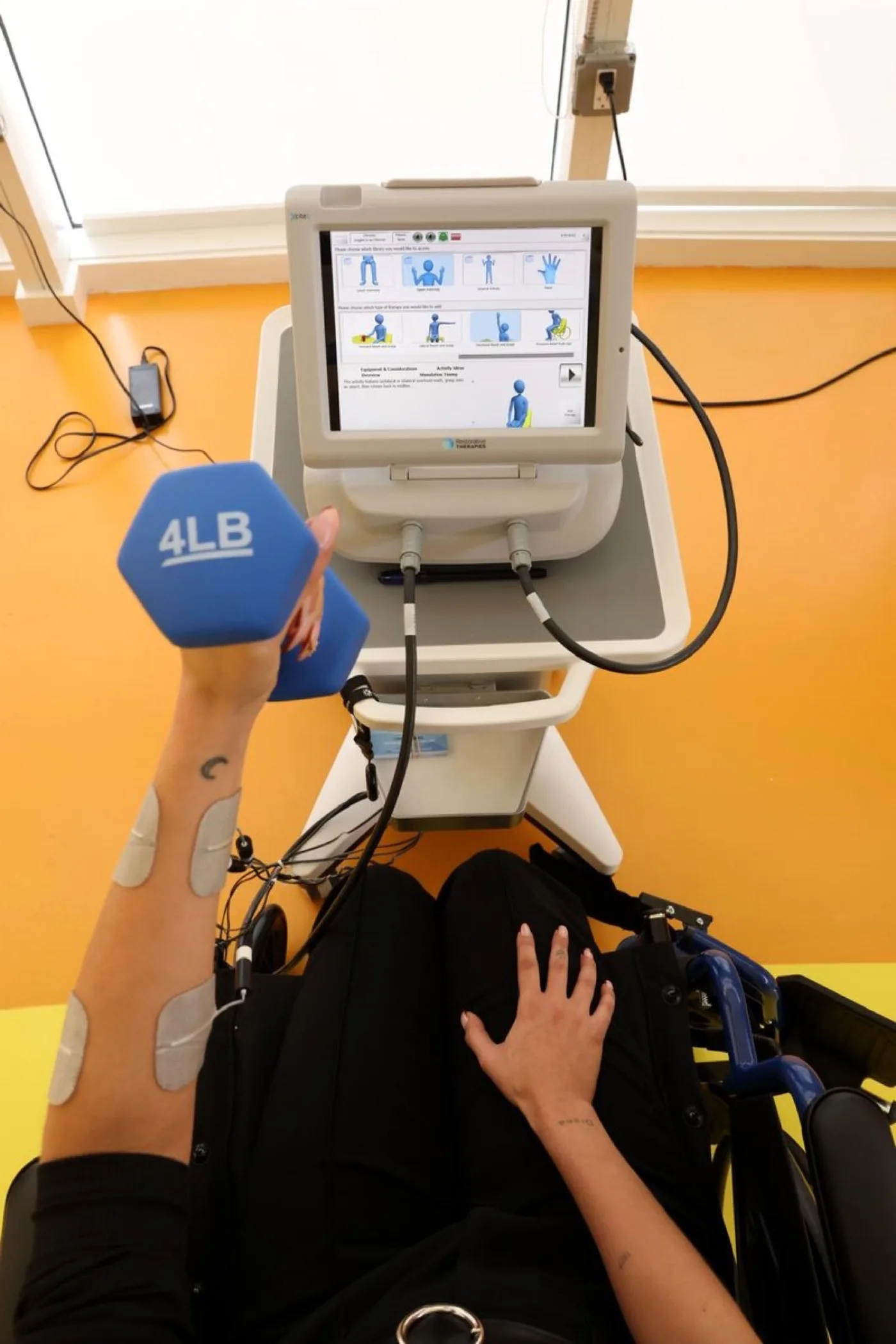
View equipment for this program
Xcite® Functional Electrical Stimulation
Electrical stimulation can be coordinated with selected movements and functional task practice.
Rocher Cage
Suspension and graded resistance can support movement, positioning, and range-of-motion practice.
MOTOmed Muvi
Motor-assisted arm and leg cycling can be adjusted to the person’s current movement ability.
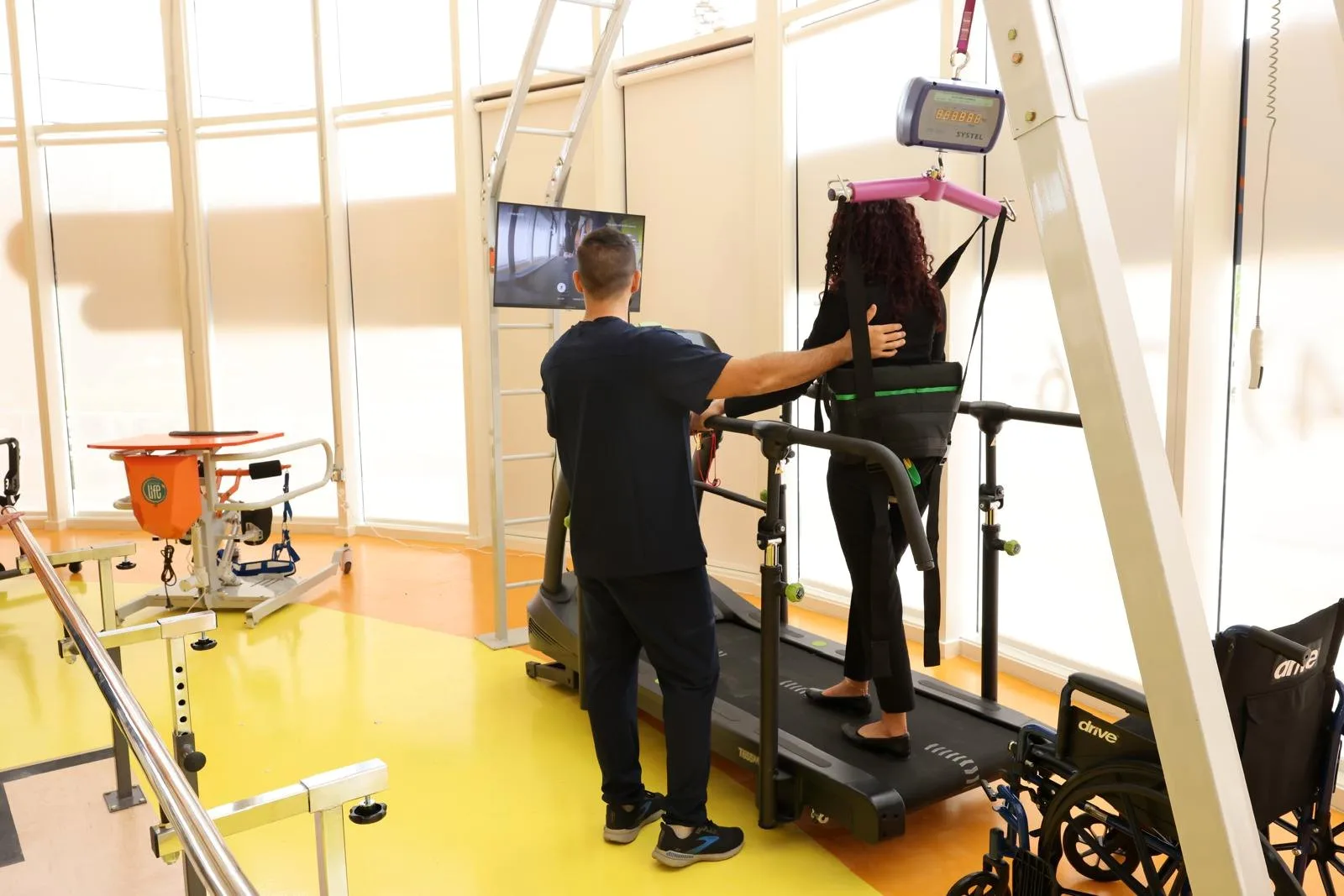
Body-Weight-Supported Treadmill
A harness reduces the amount of body weight the patient must manage during supported walking practice.
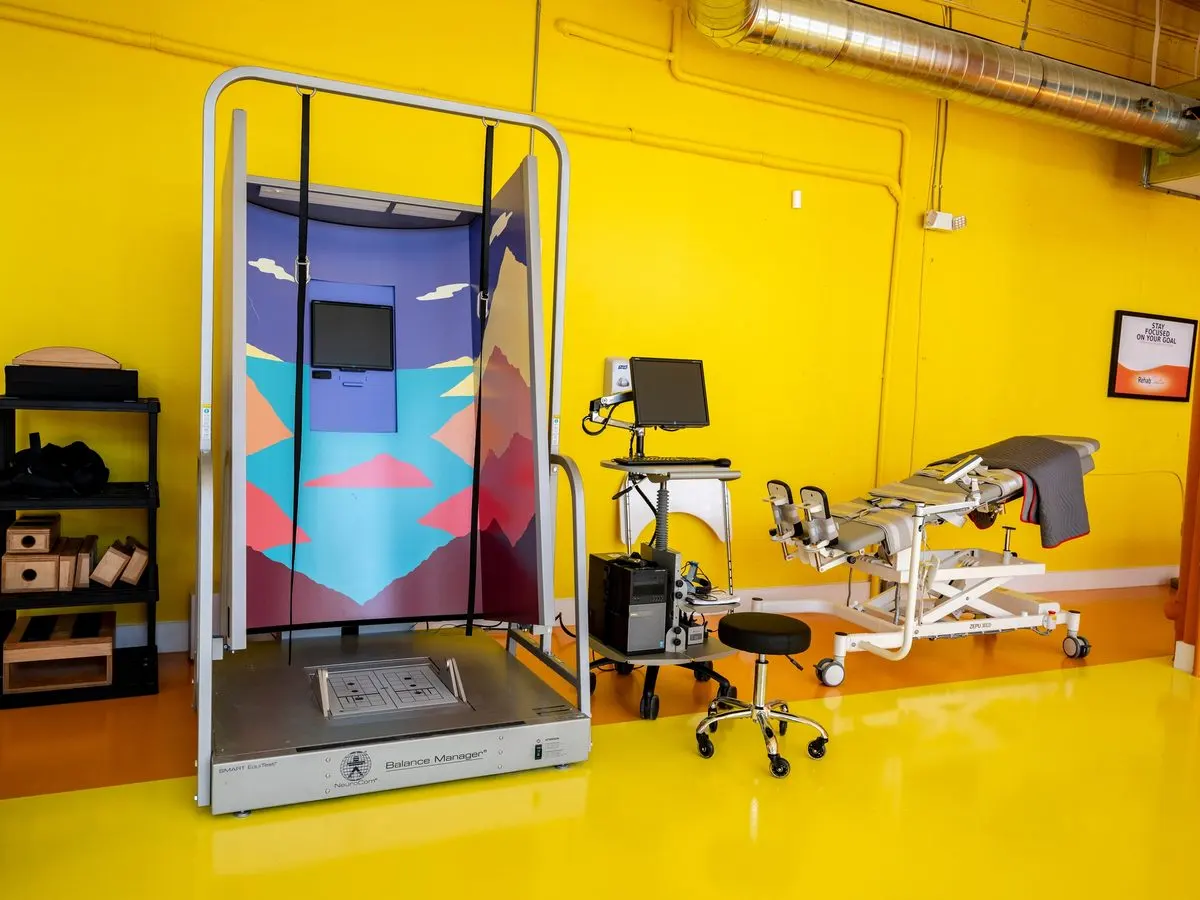
ZEPU Standing Table
The table can bring the body gradually toward an upright position when standing tolerance is part of the plan.
SMART EquiTest® Balance System
Computerized assessment and training can measure balance responses and guide appropriate balance practice.
ZEPU Occupational Therapy Table
A modular workstation for arm and hand movement, coordination, dexterity, and functional task practice.
Standing Frame
The frame provides support for upright positioning when independent standing is not currently appropriate.
Parallel Bars
Bilateral hand support can be used for standing, transfers, weight shifting, stepping, and gait practice.
Multiple sclerosis rehabilitation questions
Talk with us about your questionsCan therapy help if my symptoms vary from day to day?
The plan can be adapted to symptom variability, fatigue, and your response to activity. Tell the therapist about meaningful changes at every visit.
Will the program address fatigue?
Fatigue can be part of the evaluation. Therapy may include pacing, task planning, energy conservation, and carefully dosed activity.
What should I bring?
Bring recent neurology information, your medication list, therapy reports, and the mobility equipment you currently use.