
Muscular Dystrophy Physical Therapy in Hallandale Beach
Physical and occupational therapy for mobility, joint movement, positioning, and daily tasks with muscular dystrophy. Your specific diagnosis, current abilities, fatigue, and medical guidance shape the plan.
Care in English and Spanish
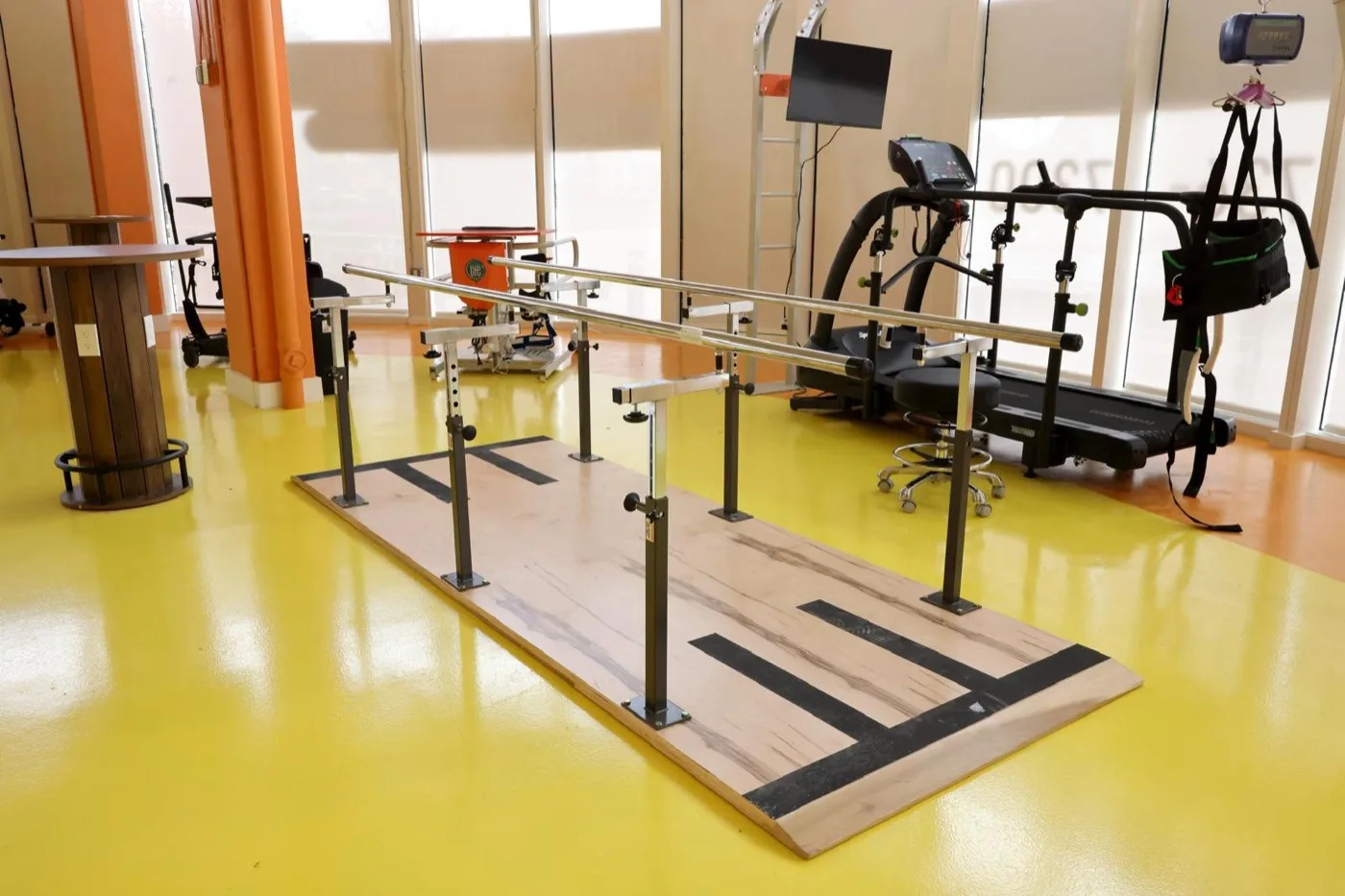
Muscular dystrophy care for mobility and daily function.
There is no single muscular dystrophy program. Recommendations depend on the diagnosis, stage, heart and breathing considerations, fatigue, contracture risk, and daily needs.
Ask a QuestionMobility changes
Support for walking, transfers, posture, supported standing, or wheelchair mobility as appropriate.
Tightness and limited range
Positioning, stretching, and movement strategies selected to support joint mobility and comfort.
Daily-task difficulty
Occupational therapy strategies and equipment for self-care, hand use, school, work, or home routines.
Practical, diagnosis-specific goals
Activity is selected carefully to support function while respecting weakness, fatigue, and medical precautions.
Range and positioning
Support comfortable alignment and available joint motion.
Functional mobility
Practice the safest appropriate way to move at home and in the community.
Daily activities
Adapt self-care, hand use, and routines to current abilities.
Equipment needs
Review supports or mobility equipment when they could improve access and safety.
Your first muscular dystrophy rehabilitation visit
Bring the exact diagnosis and guidance from your neuromuscular team so the evaluation can be specific to your condition.
Review diagnosis and precautions
We review neuromuscular notes, medications, cardiac or respiratory guidance, and therapy history.
Assess current abilities
The team reviews range of motion, posture, mobility, transfers, fatigue, and daily tasks.
Choose safe priorities
We define practical goals and the level of activity or adaptation that fits now.
Technology that supports your Muscular Dystrophy Rehabilitation
Specialized systems may support positioning, assisted movement, mobility, standing, or daily task practice when these activities are part of the plan. Equipment is selected according to current strength, endurance, safety, and goals.
Explore all technology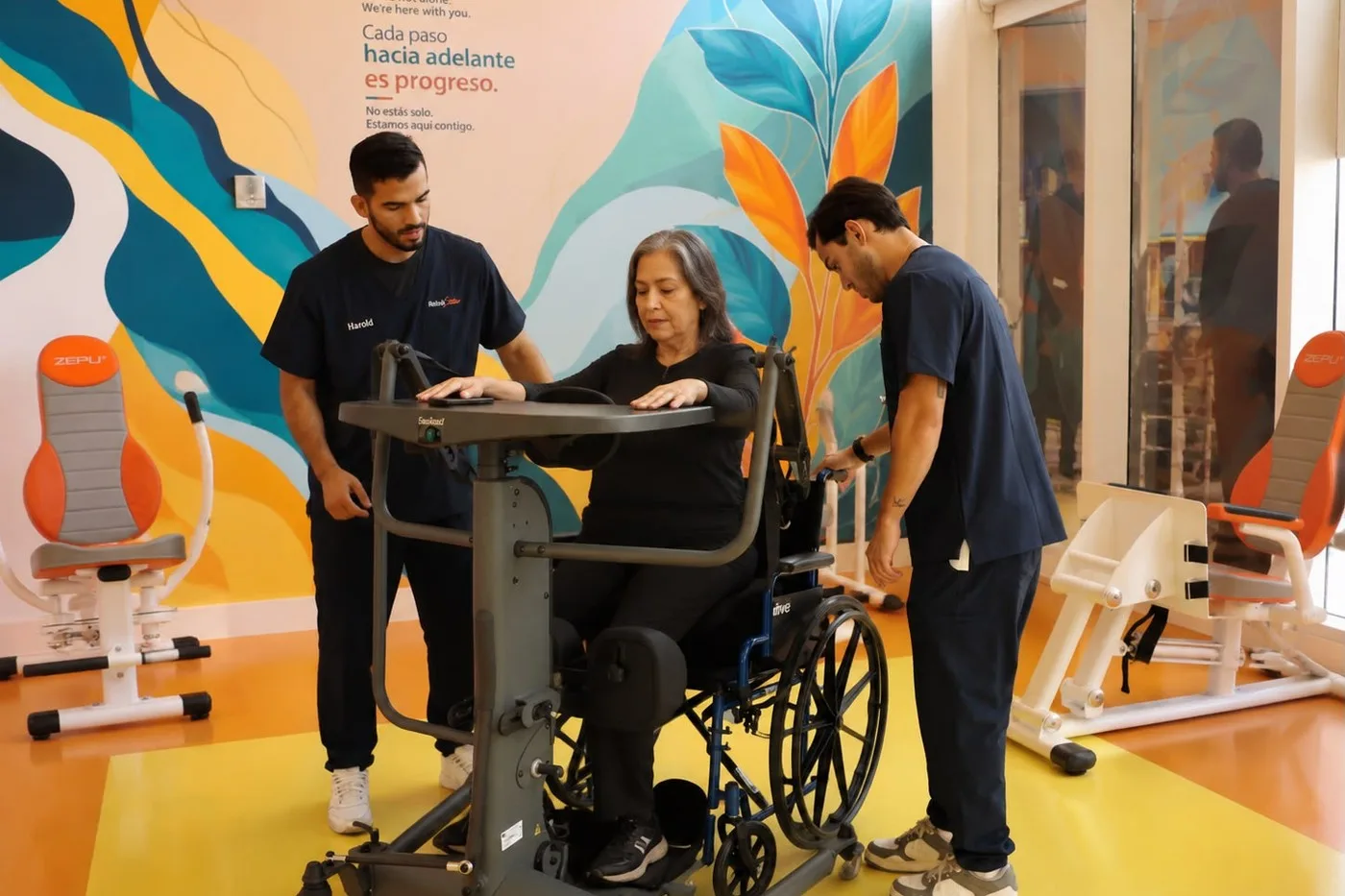
View equipment for this program
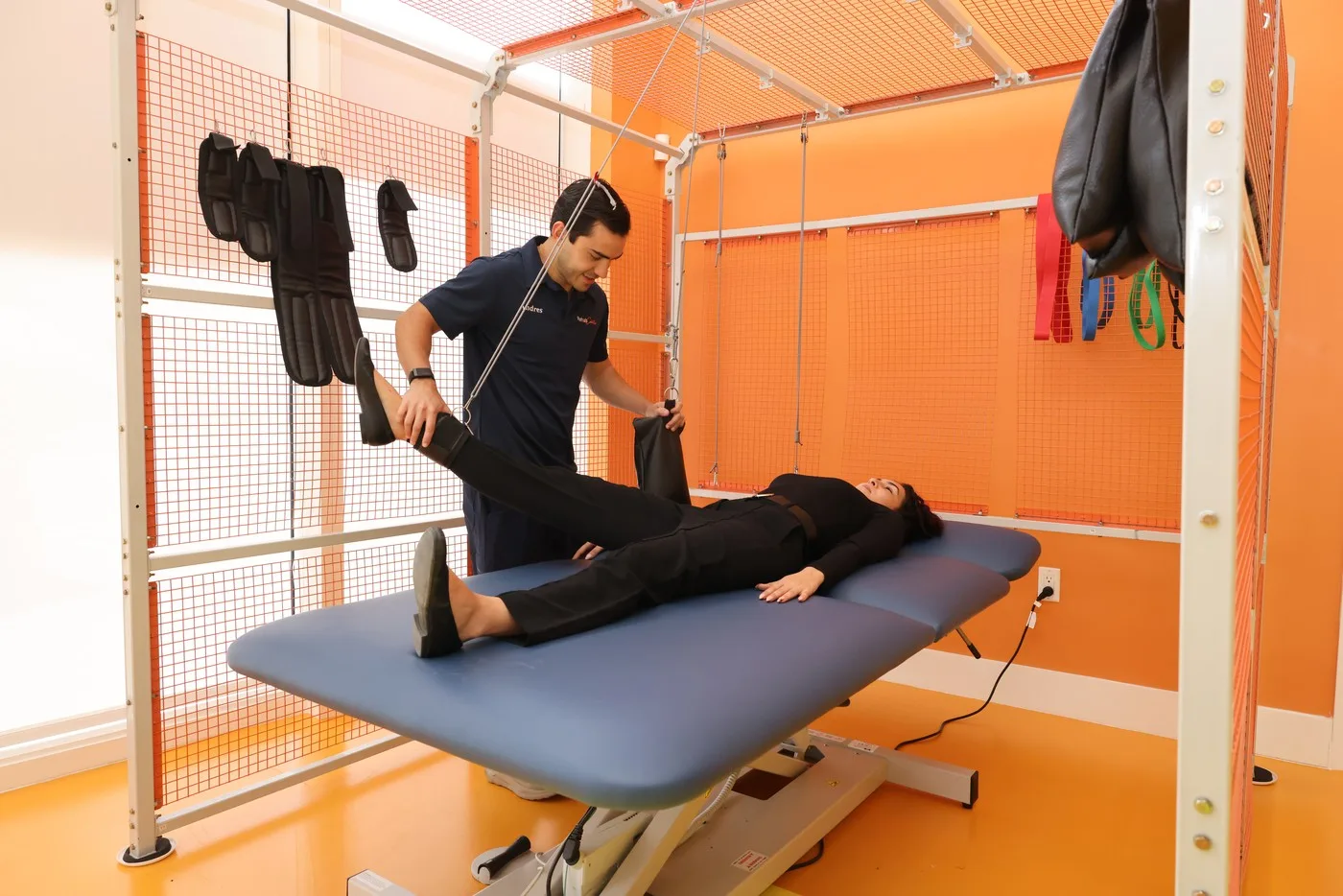
Rocher Cage
Suspension and graded resistance can support movement, positioning, and range-of-motion practice.
MOTOmed Muvi
Motor-assisted arm and leg cycling can be adjusted to the person’s current movement ability.
Body-Weight-Supported Treadmill
A harness reduces the amount of body weight the patient must manage during supported walking practice.
ZEPU Standing Table
The table can bring the body gradually toward an upright position when standing tolerance is part of the plan.
SMART EquiTest® Balance System
Computerized assessment and training can measure balance responses and guide appropriate balance practice.
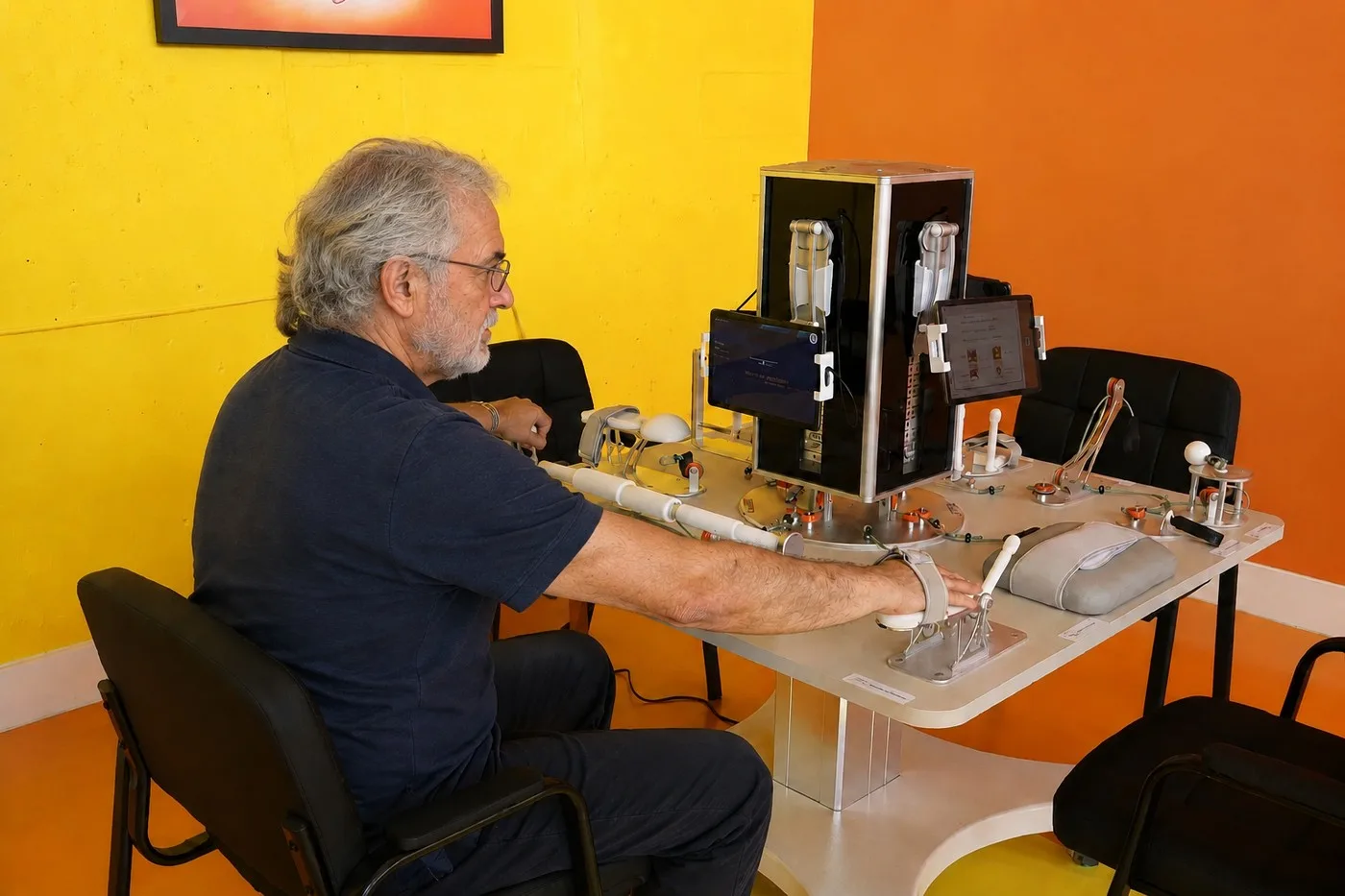
ZEPU Occupational Therapy Table
A modular workstation for arm and hand movement, coordination, dexterity, and functional task practice.
Standing Frame
The frame provides support for upright positioning when independent standing is not currently appropriate.
Parallel Bars
Bilateral hand support can be used for standing, transfers, weight shifting, stepping, and gait practice.
Muscular dystrophy rehabilitation questions
Talk with us about your questionsIs the program the same for every type of muscular dystrophy?
No. The type of muscular dystrophy, current function, fatigue, medical considerations, and personal goals all change the plan.
Will therapy include exercise?
It may, but activity must be individually selected and carefully dosed. The evaluation determines what is appropriate.
Can therapy address equipment and daily tasks?
Yes. Occupational and physical therapy may address positioning, mobility equipment, self-care, and task adaptations.