Rehabilitation technology
What rehabilitation equipment can measure and support
A plain explanation of computerized balance testing, electrical stimulation, assisted cycling, and body-weight-supported walking.
In brief
Rehabilitation equipment has three practical jobs: measure a response, assist a movement, or make repeated practice possible under controlled conditions. Some systems do more than one.
The evaluation still sets the direction. Your clinician chooses equipment only when it matches a functional goal, your current abilities, and the medical precautions that apply to you.
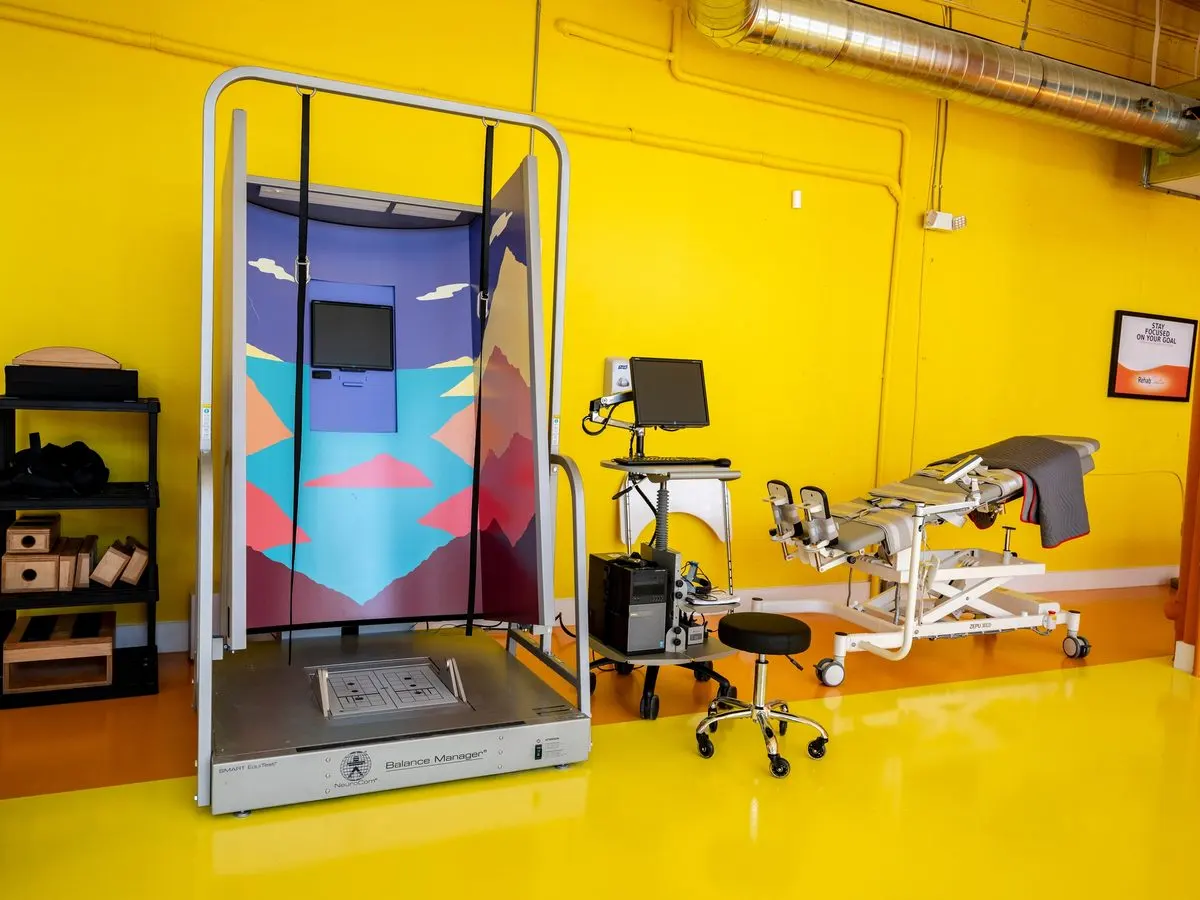
Computerized balance assessment
The SMART EquiTest uses a force platform and controlled visual or surface conditions to record standing balance. This can show how a person uses vision, inner-ear balance signals, and information from the feet, joints, and muscles to stay upright.
The measurements add detail to the physical examination. The clinician interprets them together with symptom history, walking, strength, medications, and medical findings.
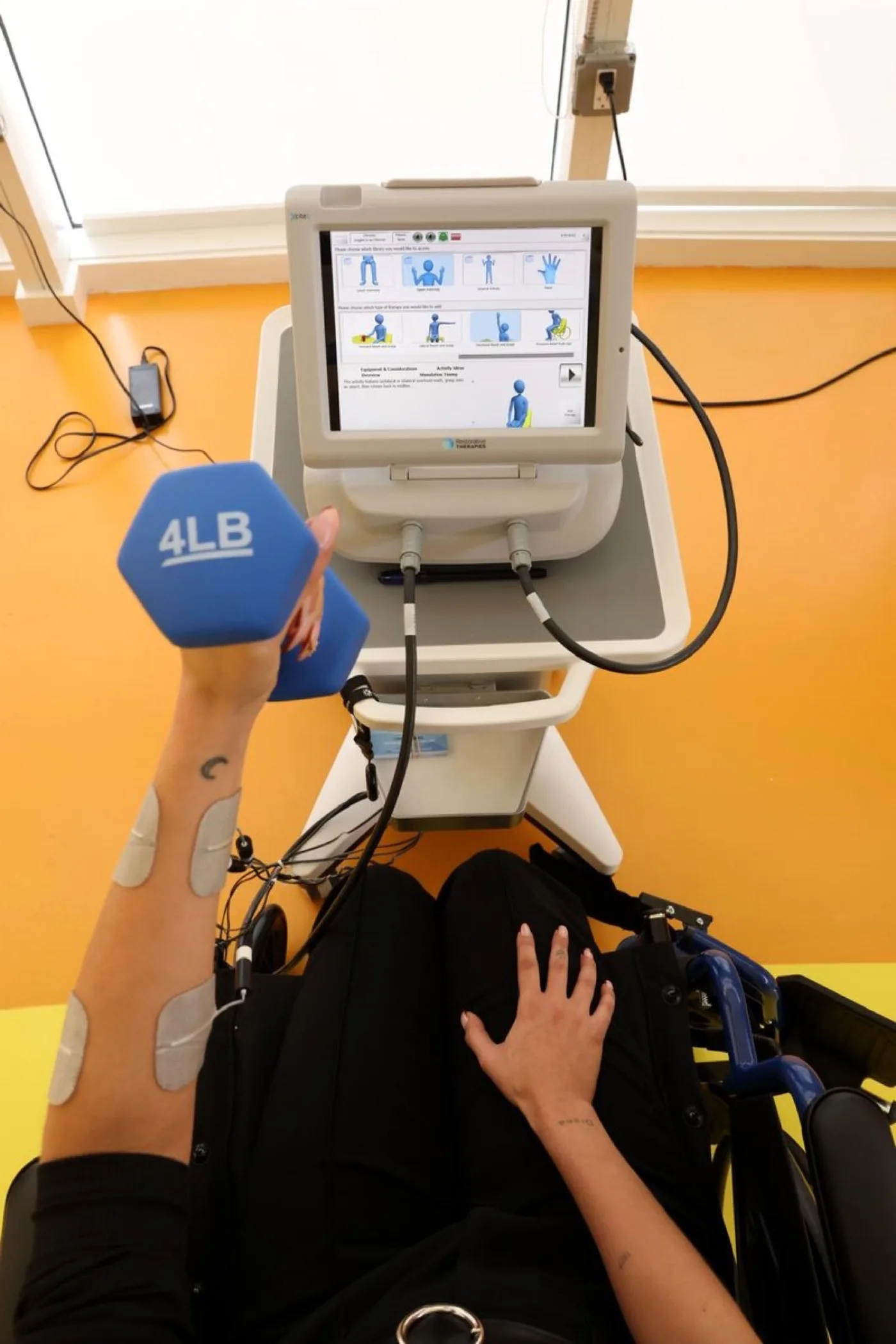
Functional electrical stimulation during movement
Functional electrical stimulation, often shortened to FES, sends controlled electrical pulses through electrodes placed over selected muscles. The Xcite system coordinates stimulation with functional activities selected by the therapist.
A separate FES cycling system can time stimulation with the pedal cycle. The therapist selects the muscles, stimulation settings, position, and amount of assistance for the individual session.
Motor-assisted cycling
The RECK MOTOmed loop can provide passive, motor-assisted, or active arm and leg cycling. This lets the clinician match the cycling mode and resistance to the movement the patient can produce that day.
Motor assistance and FES are different tools. The equipment in front of you, the electrodes being used, and the treatment goal determine which type of cycling is part of the session.
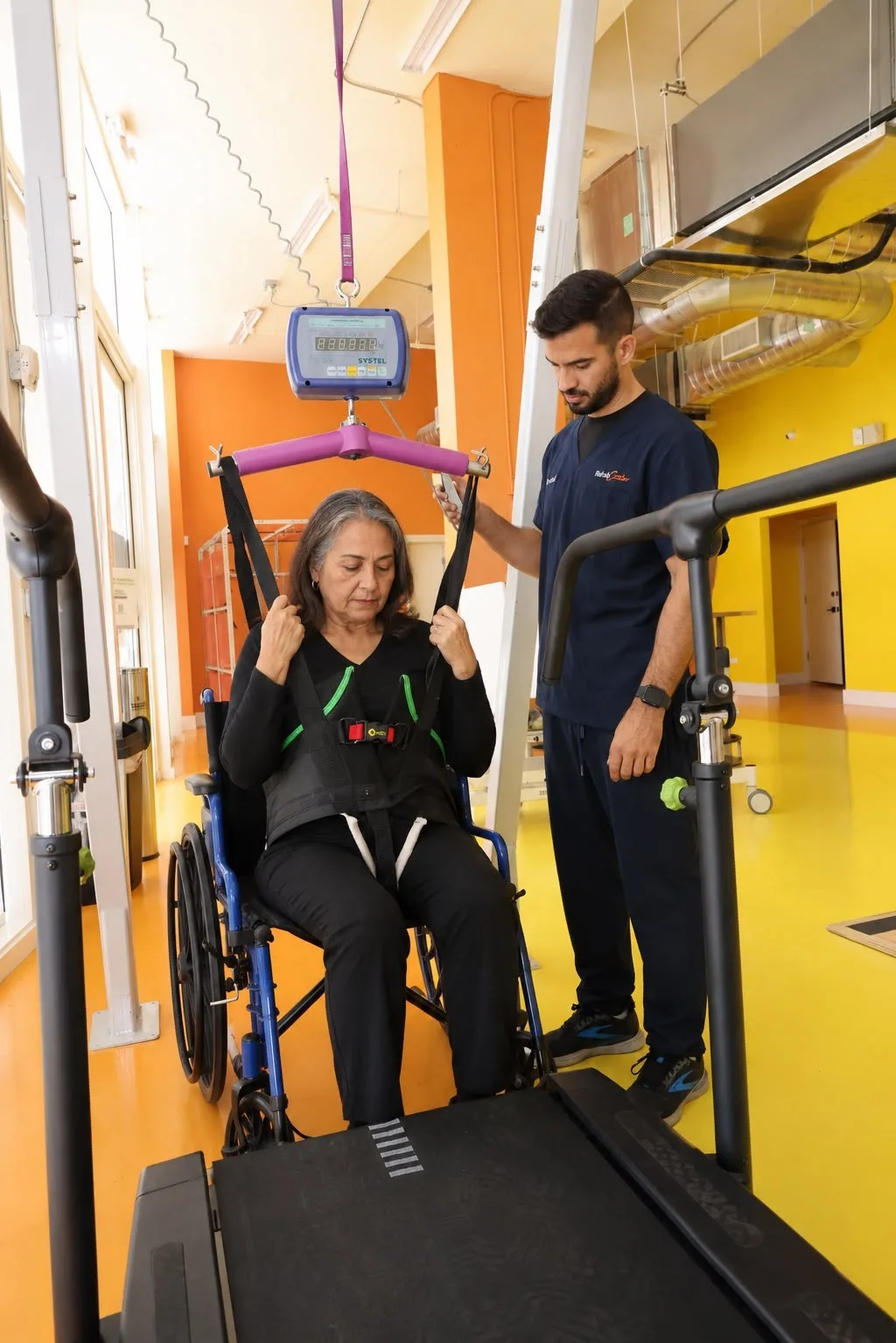
Body-weight-supported walking
A body-weight-support system can reduce the load a patient must manage during walking practice. This gives the therapist room to work on foot placement, step timing, upright posture, or endurance with controlled loading.
The amount of support changes according to safety, strength, balance, and the goal of the session. A therapist stays responsible for setup, guarding, and progression.
How the team decides what to use
A diagnosis is one part of the decision. The team also considers current movement, sensation, skin condition, pain, fatigue, blood pressure response, implanted devices, surgical restrictions, and the task the patient wants to improve.
Ask what the equipment is measuring, why it was selected, how the settings will change, and how the activity connects to a daily goal. Your progress depends on many factors, and equipment cannot predict or guarantee an outcome.
Frequently asked questions
What is functional electrical stimulation in rehabilitation?
Functional electrical stimulation, or FES, sends controlled electrical pulses through electrodes placed over selected muscles. A therapist may coordinate the stimulation with a functional activity or a cycling movement, then adjust the muscles, settings, position, and assistance for the individual session.
Does rehabilitation equipment replace the therapist?
No. Equipment can measure a response, assist movement, or support repeated practice, but the clinician still evaluates the patient, selects the task, checks precautions, sets up the equipment, provides guarding, interprets measurements, and decides how the activity should progress.
What does computerized balance testing measure?
Computerized posturography records standing balance under controlled visual or surface conditions. The results can help show how a person uses vision, inner-ear balance signals, and information from the feet, joints, and muscles. A clinician interprets the measurements with the rest of the examination.
How does the rehabilitation team choose equipment?
The team matches equipment to a functional goal, current movement, safety needs, and medical precautions. The decision may also consider sensation, skin condition, pain, fatigue, blood pressure response, implanted devices, and surgical restrictions. No device can predict or guarantee an outcome.
Sources and device information
The equipment descriptions were checked against the following government and manufacturer resources:
- Balance Disorders: diagnosis and posturographyNational Institute on Deafness and Other Communication DisordersOpen source
- Xcite2 Therapy SystemRestorative TherapiesOpen source
- Xcite Clinical Station indications for useU.S. Food and Drug AdministrationOpen source
- MOTOmed loop instruction manualRECK-Technik / MOTOmedOpen source